The Yale Film Archive, a member of the International Federation of Film Archives, is an extensive archive within Yale University's library which currently holds over 8,000 film elements, including 35mm film prints, 16mm film prints, 8mm films, original camera negatives, and original sound elements. Films in the archive range broadly in content, but are collected with the mission of advancing teaching, learning and research at Yale University. The archive additionally works to preserve films, often with connection to Yale or Connecticut history.
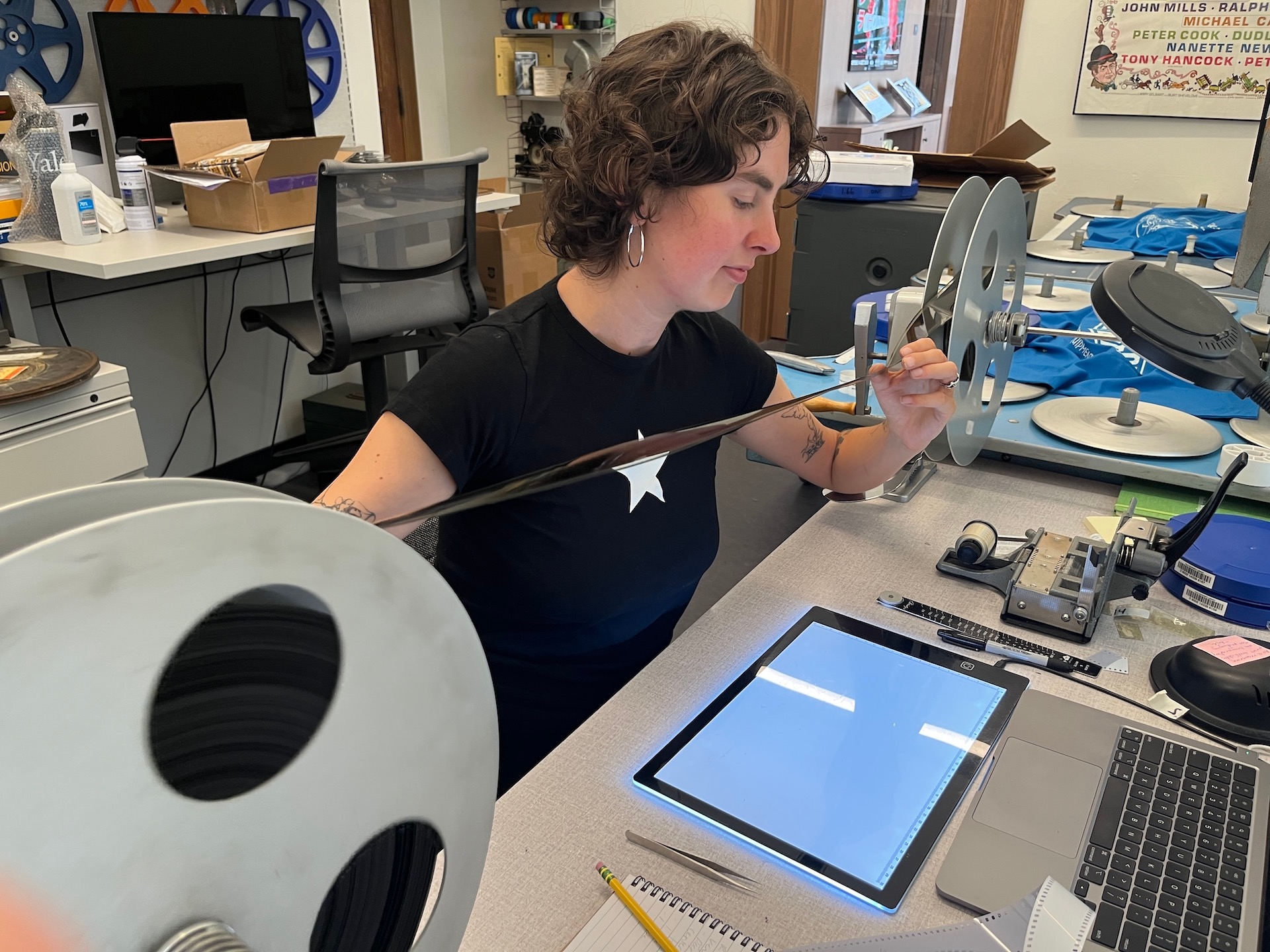
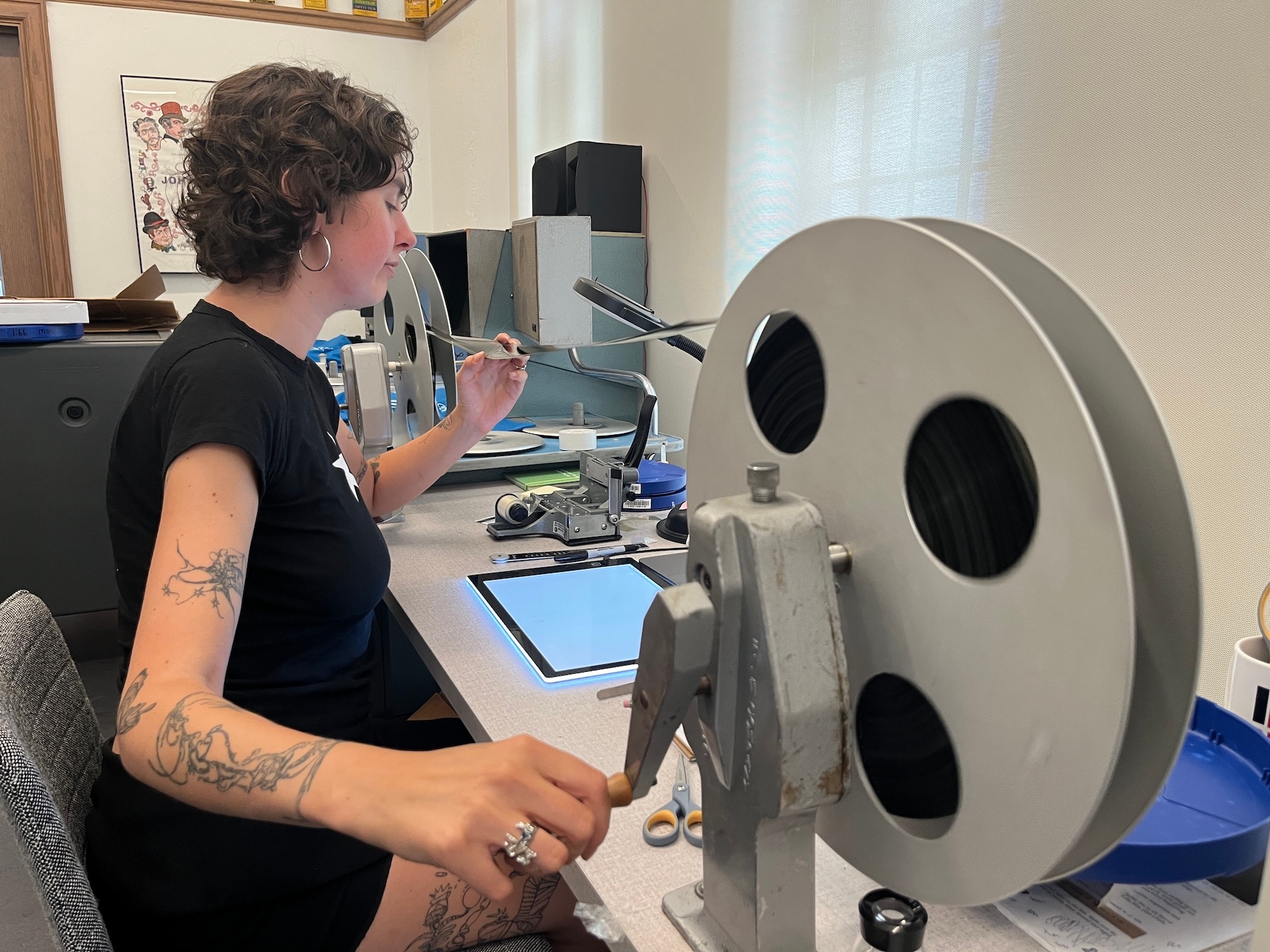
My responsibilities at the archive began with basic inspections of 35mm feature film prints which had been donated to Yale by the UCLA archive, and would have been otherwise thrown away. These films included Dirty Rotten Scoundrels (1988), Breathless (1983), Under Fire (1983) and Broadway Danny Rose (1984). These prints were in different states of condition, with some only minorly scuffed, while others had much more significant scratching and damage. During these inspections, I took detailed notes on splices, locations of any major scratches, perforation damage, and edge damage. I was then responsible for creating new records for these films within the Filemaker database, and entering all inspection notes into these records. I inspected and added newly labeled leader to many other film reels in both 16mm and 35mm, including newly printed Barbara Hammer films and a George Kuchar film. A significant project I took on, beyond my work with the archive’s 35mm collection, was with a collection of 8mm home movies. The collection is referred to as the Baker collection, and consists of around 200 8mm films all donated by Yale alumni, Lynn Baker. Baker donated this large collection of film which had been primarily filmed and edited by her father, David Baker. The films documented their family’s life in America spanning from the 1950s through the 1970s. The collection is largely Kodachrome, with a few reels or even small sections of reels in various black and white stocks. The primary issue in inspecting these films was that they had been heavily edited and often contained somewhere between 30 and 50 splices, both tape and cement. As I went through each film, I began testing each splice and found that almost all of the splices were no longer strong enough to withstand even a small amount of tension. I ended up replacing every splice within these reels, so the entire collection would be prepared for digital transfer.