Ladi'Sasha Jones
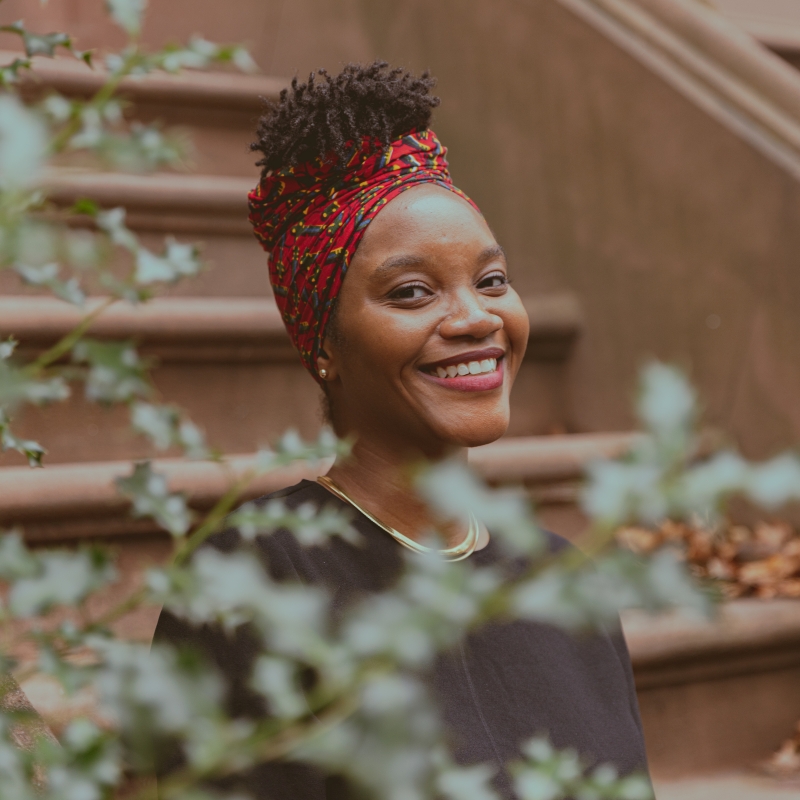
MA Arts Politics Class of 2012
BA African American Studies, Temple University, 2010 Princeton University, PhD Candidate in the History and Theory of Architecture
Ladi'Sasha Jones (she, her) is a writer, designer and curator from Harlem, New York, by way of South Carolina. Her research-based practice explores Black spatial histories through text, toy-making, and community-engaged programming. She has written about art and culture for Aperture, Avery Review, Arts.Black, e-flux Criticism, Gagosian Quarterly, Houston Center for Photography, and The Art Momentum. Her project, Black Interior Space / Spatial Thought was commissioned by THE SHED (NYC) as a part of Open Call 2021 and was the recipient of a 2021 Research and Development award from the Graham Foundation for Advanced Studies in the Fine Arts.
She is currently serving as the Co-Director of Recess, an arts organization partnering with artists, young people, and writers to generate cultural ideas, actions and experiences in Brooklyn. As an arts administrator, Jones held appointments at The Laundromat Project, Norton Museum of Art, the New Museum’s IdeasCity platform, and the Schomburg Center for Research in Black Culture. While at Recess, Ladi’Sasha is pursuing a Ph.D. in the History and Theory of Architecture at Princeton University, researching Black building histories of play and performance in the U.S. South. She also holds a M.A. in Arts Politics from New York University and B.A. in African American Studies from Temple University.
What drew you to the MA in Arts Politics?
The faculty, the interdisciplinary structure, stories from past students, and the out-of-classroom intensives with leading artists and cultural producers.How do you describe or identify your practice/ work?
How do you describe or identify your practice/ work?
Writer and Curator
How did your experience in the program shape your work?
The winter intensive with Dr. Vega in Puerto Rico and the spring course with Alfredo Jaar both shifted how I positioned my practice and its relationship to community engagement, social practice, and cultural theory.
What are some of the challenges and/or rewards of this program?
The two-semester format seemed too short of a timeline, however the core curriculum created a rigorous and experimental environment to deeply engage with and be challenged by my cohort.