Shehla Khan
2026 MA Symposium
Shehla Khan, artistically known as “Shehla of the Stage,” is an Indian-origin actor, director, writer, and storyteller whose work explores identity, resilience, justice, and belonging. Trained in theatre and experienced across stage, film, and costume departments, she creates emotionally grounded performances that invite audiences to reflect on the social, cultural, and political forces that shape human experience.
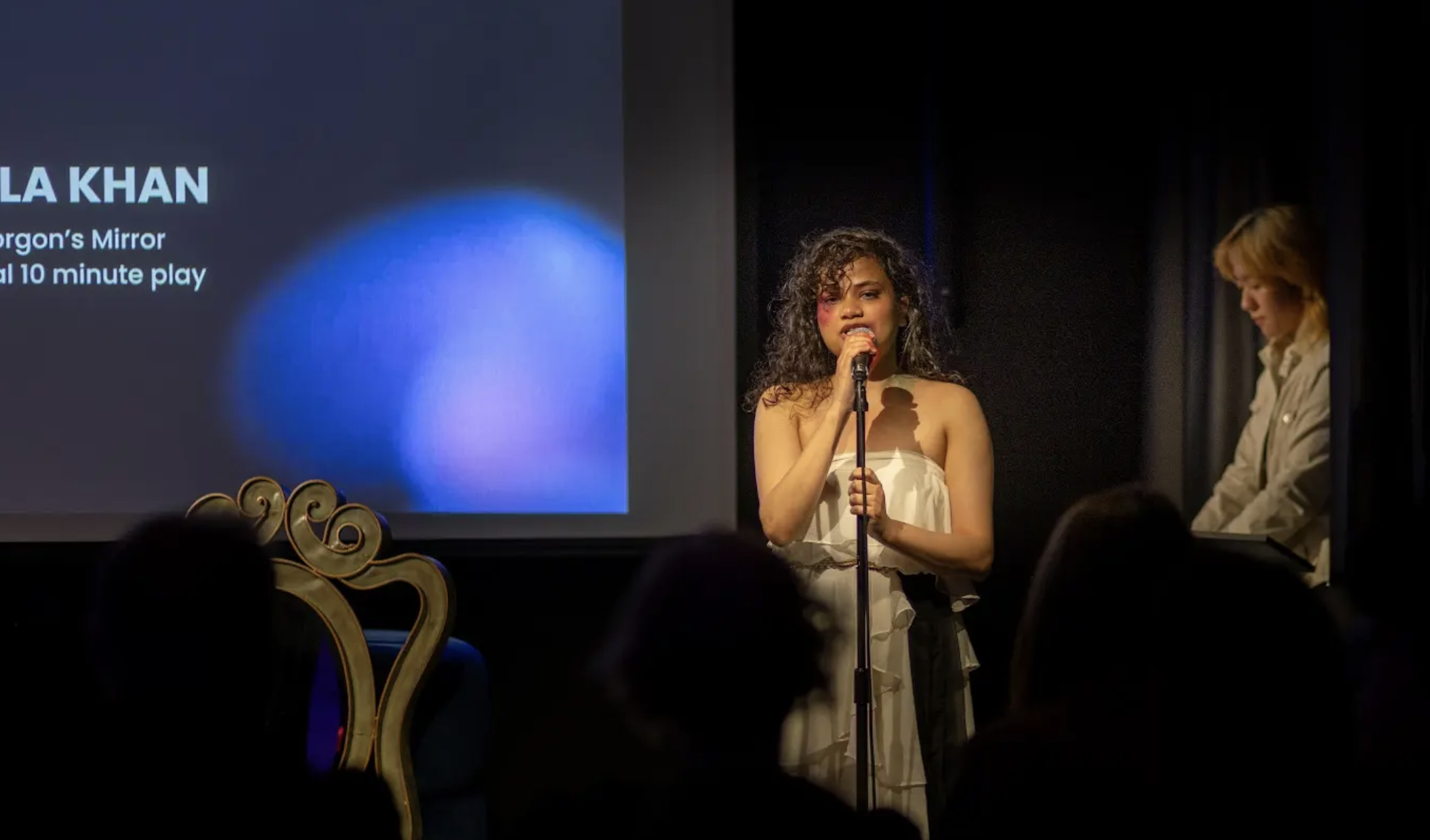
She performed her original solo play, The Gorgon’s Mirror, at the International Students’ Symposium 2025 at the NYU Production Lab, where she explored themes of trauma, survival, transformation, and reclaiming power. Through a reimagining of the myth of Medusa, the work challenged traditional narratives of victimhood and monstrosity, presenting Medusa not as a cursed figure but as a survivor navigating violence, self-discovery, and agency. These themes have remained central to her artistic practice and academic work at NYU, where she has continued to investigate questions of identity, belonging, resilience, social justice, healing, and transformation through storytelling, performance, and classroom-based creative projects. Whether on stage or through written and performative assignments, she uses narrative as a tool to examine how individuals navigate systems of power, marginalization, cultural expectations, and personal adversity. Her work seeks to uncover the emotional and psychological complexities of survival while creating space for reflection, empathy, and dialogue.
Project Title: TOOTHBRUSH: Welcome to my disappearance
Project Description: When I dream, I dream that everyone from every corner of the world is speaking my language – or rather, that we are all speaking a single language born from our shared "one-ness." In this dream, the mute speak, the deaf hear, the blind see, and even the nonexistent exists. Yet when I open my eyes, they disappear.
This performance project explores the narrative and lived experience of an individual(me) attempting to recover from years of trauma, abuse, and isolation, resulting in emotional and cognitive stagnation. What is healing? Is it linear? Certainly not. How does a person disappear before they even begin the healing process? At what point in their journey do they realize they are slowly fading away? Or do they ever realize it at all, that they have "disappeared"?
The work investigates what “‘disappearance” does to the performer and how it alters their sense of self, presence, and performativity. What happens when the only socially accepted tool of expression – language – is taken away? How does one communicate pain, memory, isolation, or even existence when the very mechanism used to confirm and express identity begins to fail?
Through movements, silence, fragmented communication, and embodied performance, this project examines the liminal space between presence and absence, visibility and invisibility, speech and silence. It asks whether healing begins when language returns, or whether healing starts in the difficult process of learning how to exist with in/animated objects in our immediate environment, when language can no longer carry the weight of what has been endured.
Project Inspiration: Drawing from my South Asian cultural traditions as well as contemporary social realities, my work frequently explores themes of aspiration, migration, survival, metamorphosis, and quiet protest. Whether working in theatre, film, or performance art, I seek to create spaces for reflection, dialogue, and transformation, encouraging audiences to engage critically with the world around them while recognizing the complexity and endurance of the human spirit.