Denisse Griselda Reyes
2026 MA Symposium
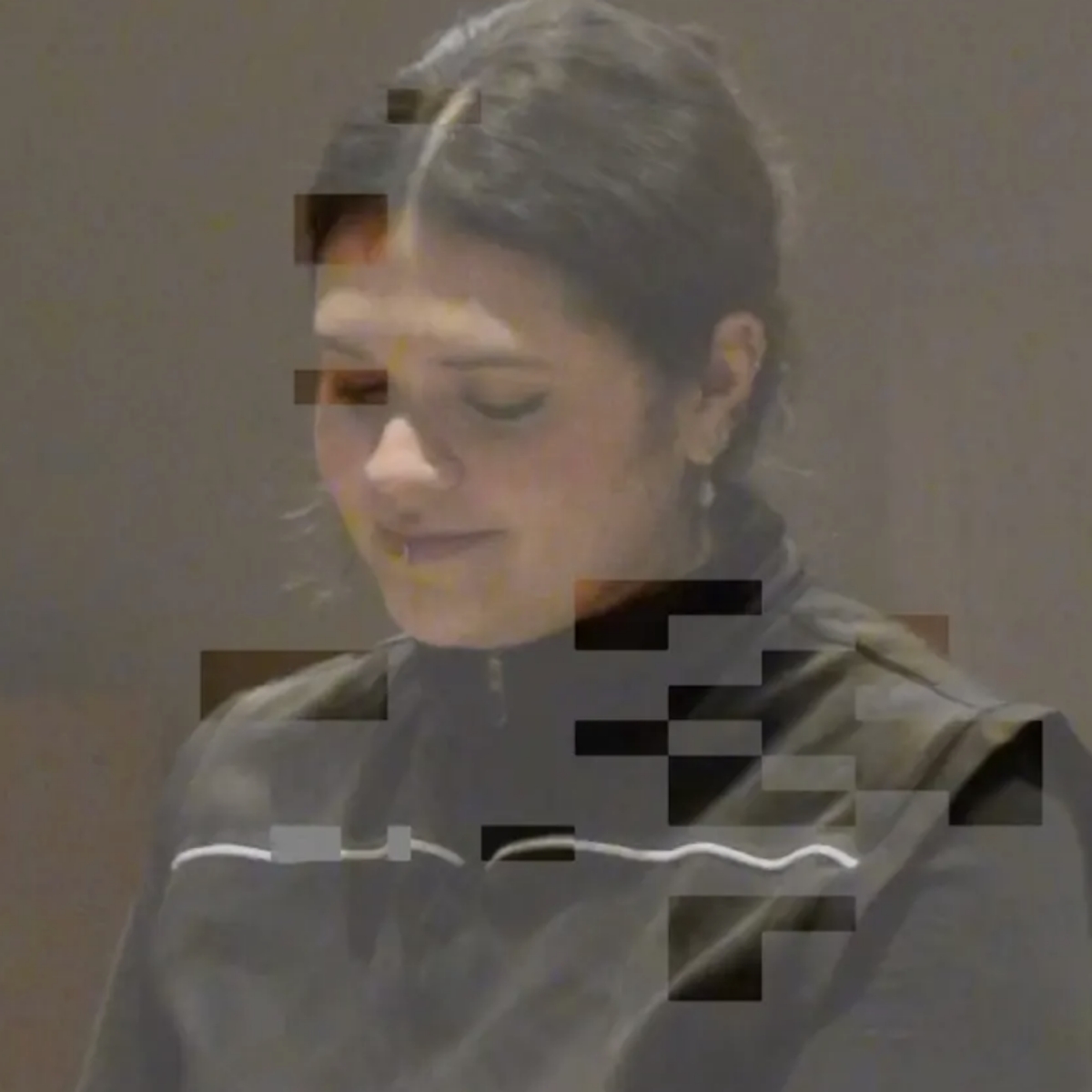
Denisse Griselda Reyes is an interdisciplinary artist, filmmaker, and scholar working across painting, video, performance, and installation. Their practice constructs layered contemporary fictions from family archives, reenactments, and research into Spanish colonial dramaturgy, Indigenous-language translation, and image-making practices in the Americas. Their work seeks to negotiate an agreement with the present moment rather than with a distant future, exploring how close one can get to reality before losing touch with it. Their work has been exhibited and screened at the Museo Reina Sofía, The Jewish Museum, White Columns, A.I.R. Gallery, Real Art Ways, Artforum, the Center for Performance and Research, The Clemente Center, MECA Art Fair, Museo Forma, and Centro Cultural de España en El Salvador. Reyes holds an MFA in Visual Arts (New Genres) from Columbia University and a BA in Art History from Wesleyan University. They are currently completing their MA in Performance Studies at NYU and will begin their PhD in Spanish and Portuguese at UCLA in the Fall.
Project Title: Synecdoche: Figure of Sacrifice
Project Description: In the shadow of the San Vicente Volcano in El Salvador stands the Terrorism Confinement Center (CECOT), an eighty-acre carceral complex and the largest prison in the Americas, constructed explicitly to house what the current administration identifies as the most dangerous elements of the population: gang-members. This project begins with its images, the prisoners in white t-shirts, shaved heads, tattoos that outline the shape of a face beneath the face, bodies stripped into visual uniformity and rendered simultaneously hyper-absent and hyper-present. Through their endless serialized circulation on TikTok, in Western media, and between advertisements, they serve as proof of successful governance. Drawing on Foucault's analytics of biopolitics and disciplinary power, Nahua cosmological frameworks, the doubled translations of the Florentine Codex, and footage recorded in El Salvador, this project argues that the visual logic organizing colonial representations of the sacrificial body, the composite figure, the monstrous deity, is not historical residue but active political technology, restaged through the choreographed spectacle of CECOT. These bodies are not being reformed or disciplined into workers. They are being made cosmologically legible as the part of the social body that must be excised, a soul sickness that the nation has contracted and must survive. What circulates is not simply punishment or deterrence as image but a sacrificial turn in which the camera performs the incision and produces a re-presentation of El Salvador.