Camila Falquez
2026 MA Symposium
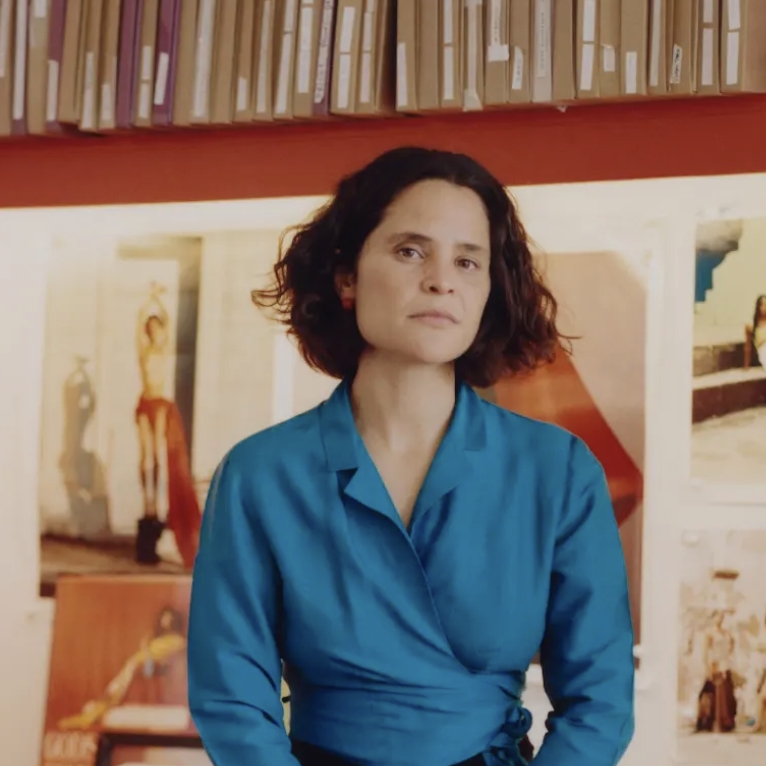
Camila Falquez is a New York-based photographer and visual artist of Colombian heritage, born in Mexico City and raised in Spain. Working across portraiture, fine art, performance, and fashion, her practice draws on surrealism and bold color to explore queer, immigrant, and indigenous stories at the intersection of diasporic aesthetics and Western art history.
Her work is held in permanent collections at MoMA, the Pérez Art Museum Miami, the Montclair Art Museum, and The Dean Collection.
Recent exhibitions include On The Flip Side with Public Art Fund across New York, Boston, and Chicago (2026); Past as Prologue at the National Academy of Design (2025); and her solo Gods That Walk Among Us at Hannah Traore Gallery (2022). She has also been invited to speak at institutions including MoMA, ICP, and NYU.
Project Title: Images in their surfaceness: The hinging possibilities of the (in)visible.
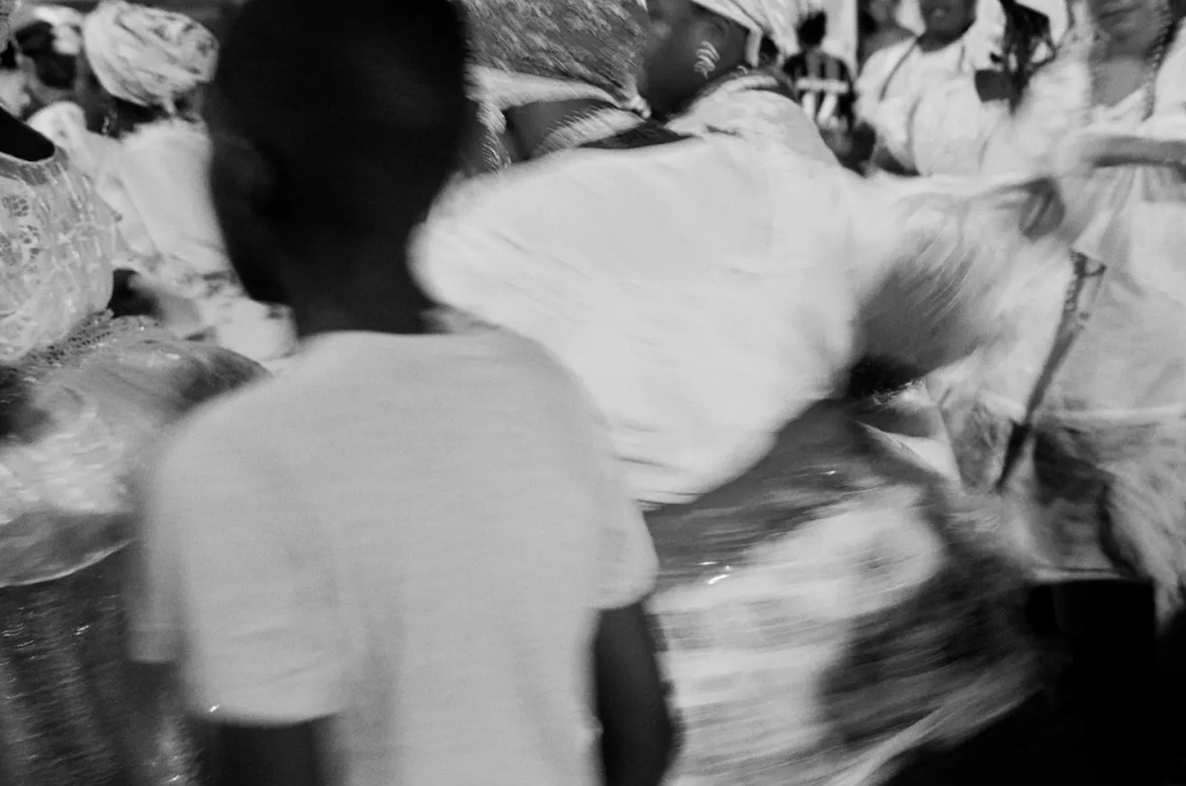
Project Description: This project explores the relationship between visibility, violence, and the invisible forces that operate within images. Beginning from the recognition that visibility has often been entangled with forms of state violence, the work asks whether the visible might also contain a different kind of force: a life-generating, rebellious, and sustaining violence that exceeds systems of capture. Rather than approaching images solely through what they reveal, this project turns toward what remains hidden within their surfaces: the rhythms, textures, and presences that resist complete engulfment. Through photographs made by Falquez across Brazil, India, Mexico, Spain, Cambodia, Nepal, and New Orleans, the work examines the capacity of images to operate as a hinge between the visible and that which must remain within the realm of the (in)visible in order to survive.
Drawing from Georges Didi-Huberman’s The Survival of the Fireflies, Federico García Lorca’s Teoría y Juego del Duende, and Édouard Glissant’s Poetics of Relation, among others, this project considers photography as a space of fugitive possibility. The images presented emerge from carnival practices in New Orleans or Salvador de Bahia; flower markets in Calcutta or Mexico City; flamenco rehearsals in Jerez de la Frontera; cracked walls in La Perla; or from within the depth of a woman’s wrinkles in Jerez de La Frontera. These images seek to remain attentive to the invisible pulsations that allow forms of life to endure despite histories of erasure and domination. In this sense, the photograph is not understood as a final revelation or an act of discovery, but as an opening: a surface that sustains the tension between presence and absence, between what is visible and what continues to move beyond the reach of “the empire’s blinding lights.”