Amanda Krische
2026 MA Symposium
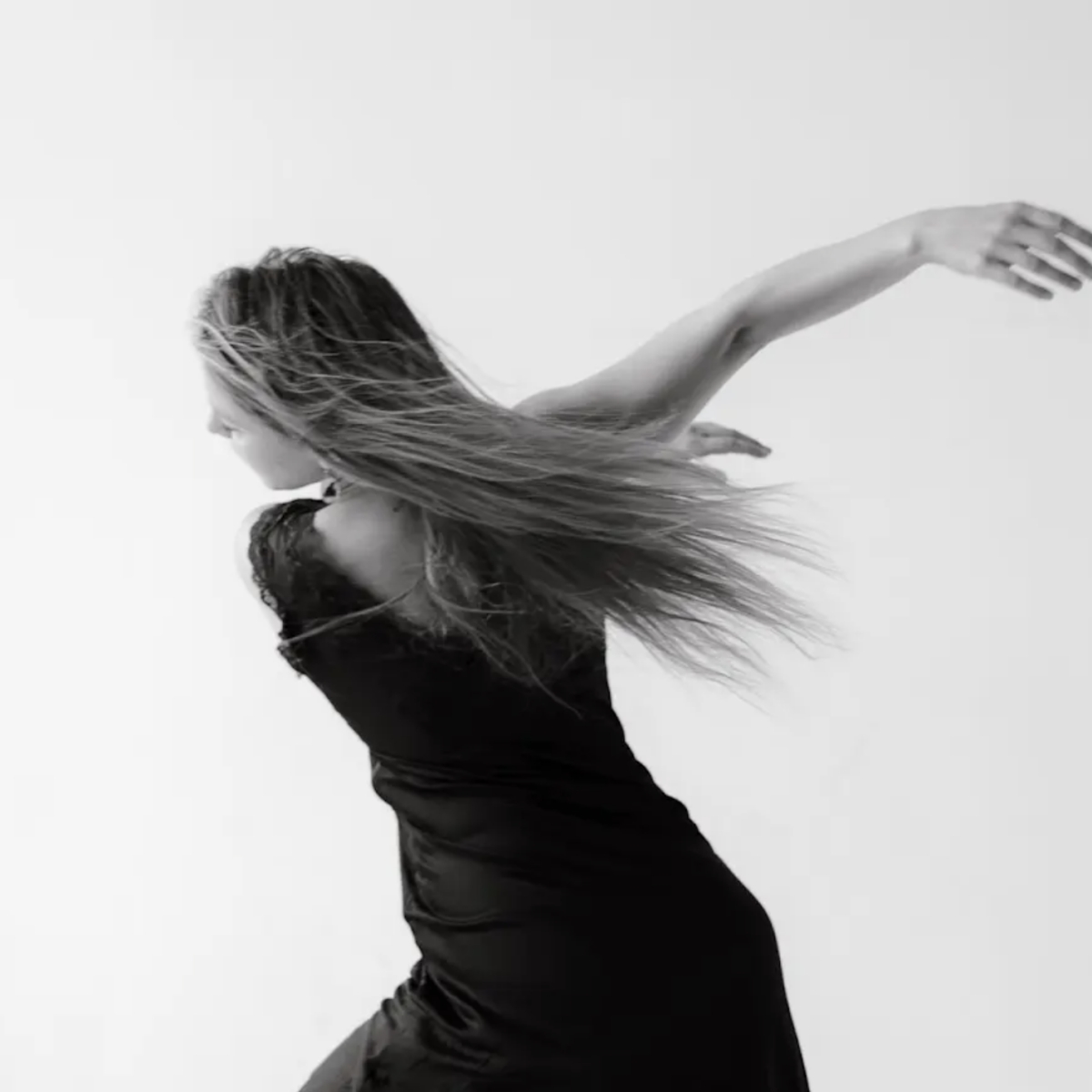
Known for creating thought-provoking, emotionally moving dance-theater works that use performance as a site of social practice, Amanda Krische is a choreographer, researcher, and herbalist preoccupied with themes of memory, sensation, thresholds, madness, and the numinous. Her practice dances around the nucleus of the gestural, moving body in order to provoke encounters with disciplines as diverse as neuroscience, theoretical physics, ecology, anthropology, and ethnography. Through these collaborative dialogues, she seeks to understand the multilingual capacity of the body to establish spaces of wonder, deep feeling, connection, and knowledge production. Her choreography has been presented at venues including the Kennedy Center, Carnegie Hall, Joe’s Pub, Danspace Project, The Metropolitan Museum of Art, and The Kitchen, as well as in public spaces such as shopping malls, public parks, and gallery spaces. She has been an artist-in-residence at institutions such as Lower Manhattan Cultural Council, Perelman Arts Center, Omi International Arts Center, Kaatsbaan, Rosas/P.A.R.T.S., and the Camargo Foundation; has been a guest teacher at Harvard, NYU, and Cooper Union; and has collaborated with institutions such as the Pina Bausch Foundation and the Louis Armstrong House Museum to generate activations of their respective archives.
Project Title: Seeking the Meaning of Gesture
Project Description: The body is (presumably) a solid form shaped and negotiated by invisibilities: time, memory, encounter, and movement. How might we tune our proverbial ears toward the language of gesture – this form which is always and at once both appearing and disappearing, entangled in a transtemporal infrastructure of contradiction? What knowledge can uniquely and precisely be produced through the behavior of a disappearing gesture, and where in the viewer’s body does this knowledge land? Just as the gesture of the body disappears, our need to make meaning of them often accelerates, seeking to confine and concretize that which we do not yet know. Using histories of dance and collective movement practices, this MA project seeks to draft a countercartography of the body as told through the language of the senses, opening a dialogue about how we see, perceive, and listen through the haptic encounters that bidirectionally cross the threshold of our skin.