What was your conference project about, and what inspired you to pursue this topic?
My project is a paper of a comparative study on two Asian diasporic photographic artists - Tseng Kwon Chi and Nikki S. Lee - about how they perform identity and negotiate visibility through their work.
I was first introduced to Tseng in a photography class in my sophomore year. Professor Misty de Berry presented his work alongside readings in Performance and Law: on race, gender, and community class. At the same time, in Performance Theory with Professor André Lepecki, we were engaging deeply with questions of performing identity. Bringing these two experiences together, I wrote my final paper, Staging Visibility: Tseng Kwong Chi’s Performances of Opacity and Exposure.
During the writing process, Professor De Berry was incredibly supportive, and our conversations in office hours led me to consider Nikki S. Lee as a comparative artist. The contrast between their approaches, Tseng’s strategic opacity and Lee’s immersive identity transformations, really intrigued me and inspired me to further develop this project.
Later, Professor Lepecki shared the opportunity to submit work to the CRS Graduate Conference, which encouraged me to refine my ideas into an abstract for submission. I was very fortunate to have the project selected, and the process became a meaningful extension of my coursework.
How did Performance Studies at NYU prepare you for presenting at this conference?
Performance Studies at NYU gave me both the theoretical foundation and the practical experience necessary to present at a graduate conference. My engagement with theorists and critical frameworks was essential in structuring my argument.
Courses like Performance Theory with Professor André Lepecki shaped how I approach art, identity, and social phenomena. The class with guest lecturer Eiko Otake inspired me to explore embodiment, where the communication between the body and environment happens in relation rather than fixed languages; how Glissant sees imagination as the force that can change mentalities, relation as the process of this change, and poetics as a transformative mode of history; discussion around “afterlife” of works, which made me rethink the photographic approaches the artists in my research implemented.
At the same time, the classroom environment in Performance Studies emphasizes discussion and presentation. I had many opportunities to share my ideas, present work, and receive feedback, which helped me build confidence in public speaking.
The mentorship from faculty was a big part. Professors are incredibly supportive of students pursuing independent research, and their encouragement made the process of submitting to and preparing for a conference feel both accessible and exciting.
What was it like presenting your work in a graduate conference setting?
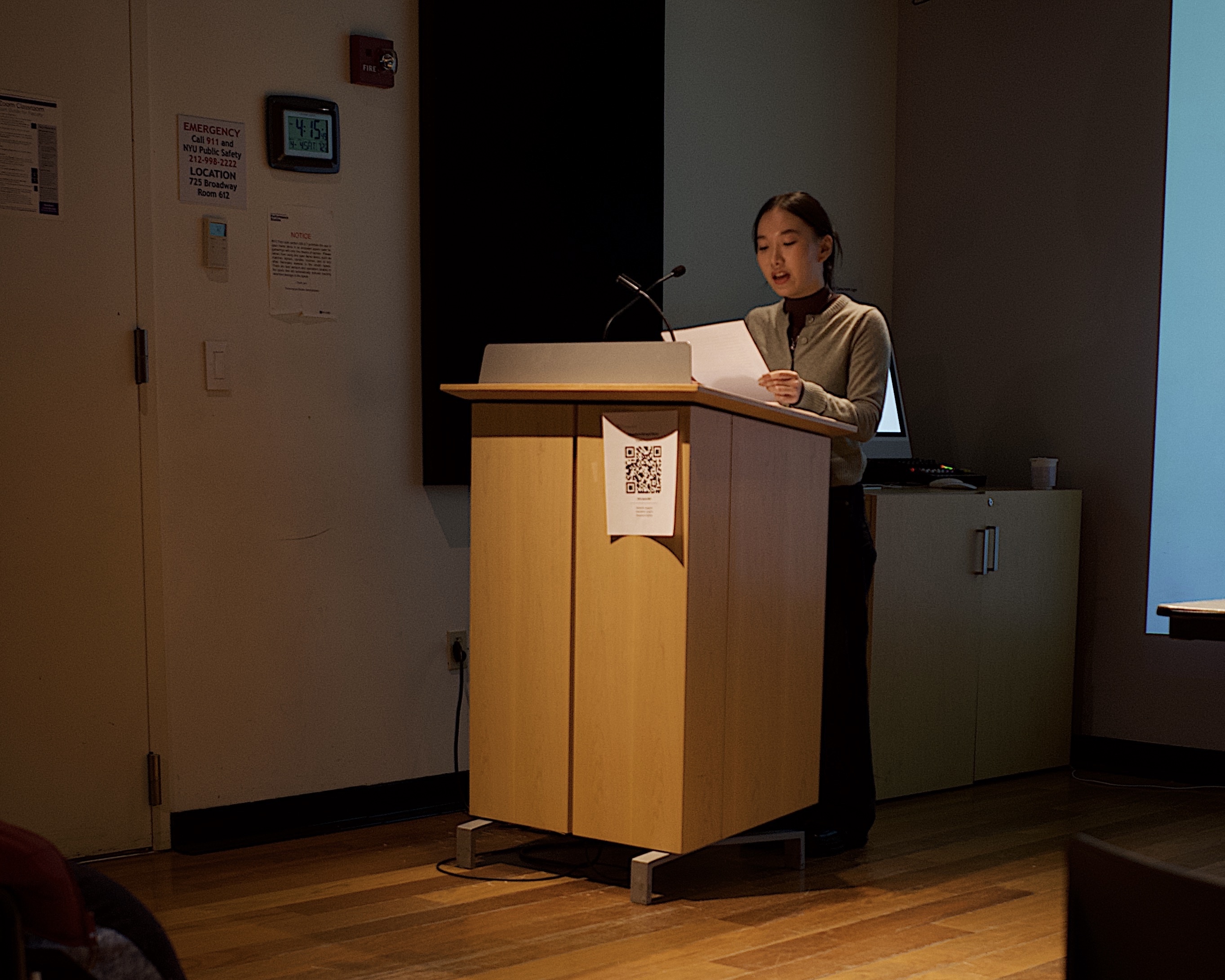
I was excited but felt nervous from the moment I received the email saying I was selected to present at the conference. Fortunately, Professor Barbara Browning helped me a lot in the preparation process. She guided me in restructuring my paper into a conference presentation format, thinking through how to address more complex or sensitive topics, and refining the overall clarity of my argument.
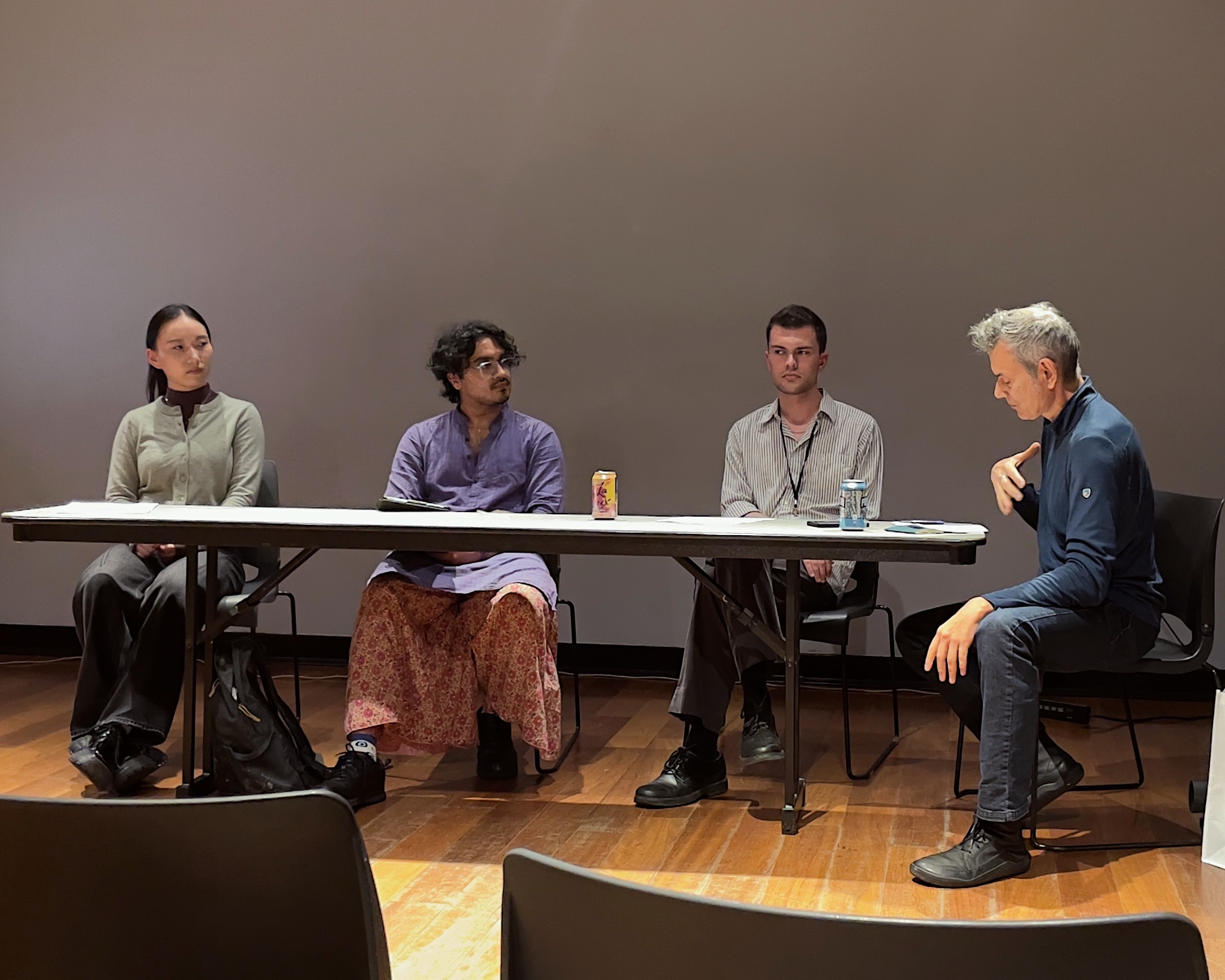
I was placed on a panel with a master’s student and a PhD student, and I was the last to present. Having the opportunity to attend other panels beforehand was incredibly helpful. It gave me a better sense of the vibe and expectations in a graduate conference setting.
Although I was still nervous during my presentation, my preparation and prior experience presenting in class, even in the same classroom, allowed me to stay composed and deliver my work smoothly. Overall, it was a deeply rewarding experience that gave me more confidence in pursuing future conferences and graduate study.
What would you say to other students who are considering submitting their work to conferences?
Don’t hesitate to try. Being an undergraduate should not discourage you from submitting your work. What matters is the strength of your ideas.
There are also many resources available to support you. For example, Professor Misty de Berry hosted a workshop on how to identify appropriate conferences last semester, which was extremely helpful. If you’re unsure where to start, I would definitely recommend reaching out to professors during office hours. They are always willing to offer guidance and feedback!
Presenting at a conference is a valuable experience, especially if you are considering graduate school. It not only helps you develop your research and presentation skills, but also allows you to connect with other master’s and PhD students and learn about their works. It is a great starting point to build conversation in the academic world.