Miranda Santiago
B.A. Capstone
Capstone Project: Huecología: Approximations and Memories
Shot on camcorder and woven with found footage from passed down archival footage, "Huecología" aims to refuse the clean lines of documentary. Instead, it draws from expansive literary, oral, and memory-based practices such as Saidiya Hartman's critical fabulation, Cheryl Dunye's imaginatively-constructed archives and Marilyn Boror Bor's excavations of indigenous matrilineal knowledge, asking what is revealed in the search for female ancestral memory. Created both for and against the archive, it ultimately begs the question of what kinds of knowledge practices and cultural memories emerge when conversations about family start to imbue the everyday chisme.
Bio
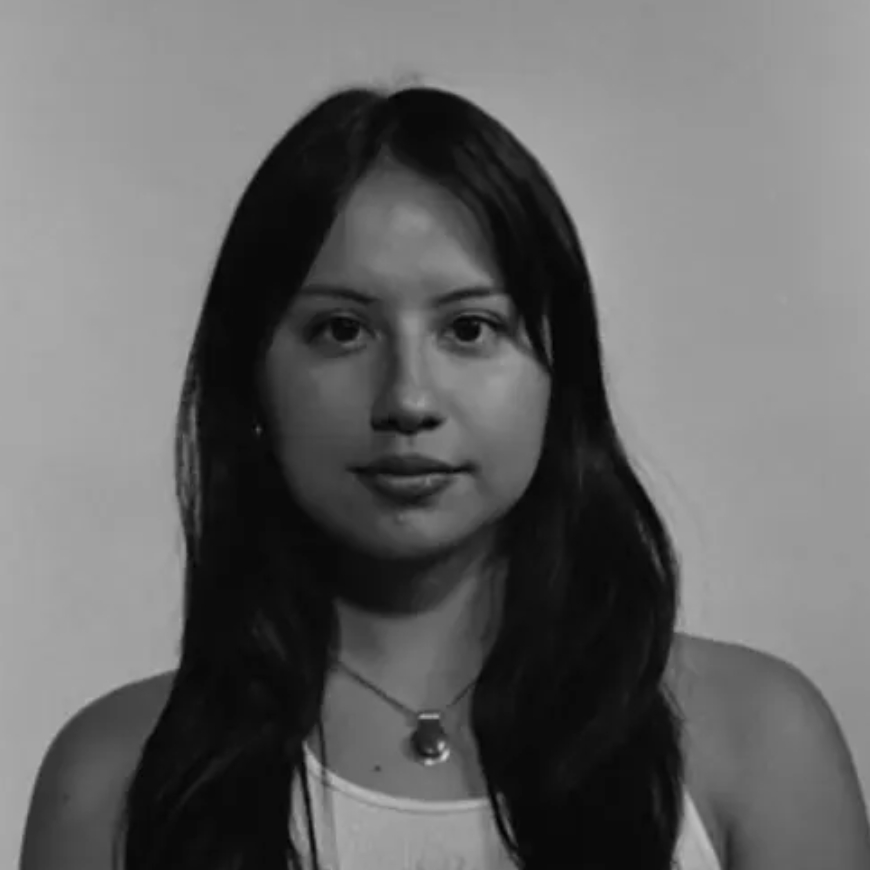
Miranda Santiago is a double major in Performance Studies and History, with a focus on Latin American political performance and memory. Originally from Cambridge, MA, she is interested in pursuing performance curation and writing in her near future, and recently completed an honors thesis in the NYU History Department centered on the political performance of the Zapatista movement in Chiapas where her family lives. Passionate about the intersection of community and the arts, she is also the co-founder and editor of a small Latin American arts and writing publication with her friends in the greater NYC area, called La Ofrenda.
Q&A with Miranda
What inspired your project?
This project was the result of dozens (probably hundreds) of conversations with my friends about our ancestors, families, and identities. Whether we were sitting in my living room, on my bed, grocery shopping, walking in the park, at the club, on the phone, most of what I learned about myself and my history has come from my chingona friends.
What does Performance Studies mean to you?
Performance studies is the way in which I understand the world transparently. Perhaps not necessarily in the strict sense of opacity, but in the possibilites that lie within a medium.
I think back to a Baldwin anecdote where he stands looking at a puddle with his friend Beauford Delaney. "I looked and all I saw was water. And he said, ‘Look again,’ which I did, and I saw oil on the water and the city reflected in the puddle...He taught me how to see, and how to trust what I saw." Performance studies has taught me how to see though, above, beyond, and within the fields that I am passionate about, namely history, anthropology, and art, in a way that makes me excited for exploring potentialities. Performance studies, to me, is grounding site of experimentation and play that I can never now live without.
Why did you major in Performance Studies?
In high school, I read a lot of Gloria Anzaldua and Cherrie Moraga. I was deeply inspired by the way they thought about and experimented with the obstacles they faced throughout life, namely in relation to identity, cultural dissonance, and sexuality. I had never been exposed to the perspectives that they wrote about. I saw myself in them, and aimed to pursue similar lines of inquiry. Performance studies, I came to find out, was the perfect place to do that.
What have you enjoyed most about Performance Studies at NYU?
The NYU Performance Studies department is unmatched in the care they provide for their students. Perhaps it comes from the very values inherent in the study of social reality and all of its complexities, but my professors and the PS administration never failed to make me feel welcomed, supported, and inspired even throughout my most difficult college moments. They take much pride in the various paths of life and inquiry that each individual student may follow, and genuinely aim to support our growth not just as students but as people.
Any advice for new Performance Studies students?
Take classes in topics that you may have the little experience in; that is where you will have the most fun. It takes at least a year or two for the concepts and language to fully click, so give yourself some grace if the classes feel complicated at first. Most importantly, appreciate the special time and attention that the professors carve out for students in office hours; they are all renowned scholars, artists, and writers that have bounds of knowledge to share.