Elijah Walton
B.A. Capstone
Capstone Project: The Body After (Life): Necropolitics and the Aesthetics of Black Disembodiment
This Capstone project examines how institutional high art and curatorial practices produce forms of dehumanization when engaging Black subjects. Through a comparative analysis of precolonial Dogon sculptural art and Robert Mapplethorpe’s Black Book, I argue that art can function as a site of symbolic death. Drawing on Achille Mbembe’s theory of necropolitics, I conceptualize this as the removal of subjectivity without the destruction of the body. In both cases, processes of fragmentation, extraction, and aestheticization transform living bodies and cultural objects into consumable forms that can reproduce and aestheticize death.
What inspired your project?
This project emerged from an initial interest in Robert Mapplethorpe’s Black Book and its critical incorporation within José Esteban Muñoz’s Disidentifications, a foundational text in Performance Studies. As I began sitting with this it expanded into a broader inquiry into what images and art objects do to Black life. I became invested in the idea of how aesthetic systems organize visibility in ways that might deprive bodies of subjectivity while sustaining their presentation as objects of desire, value, and consumption. This concept of After (Life) names this suspended condition that is not simply death or absence, but a prolonged aesthetic afterlife in which life is neither fully present nor fully ended. Instead, the body is held in a bracketed state, transformed into an object available for circulation, consumption, and looking.
Bio
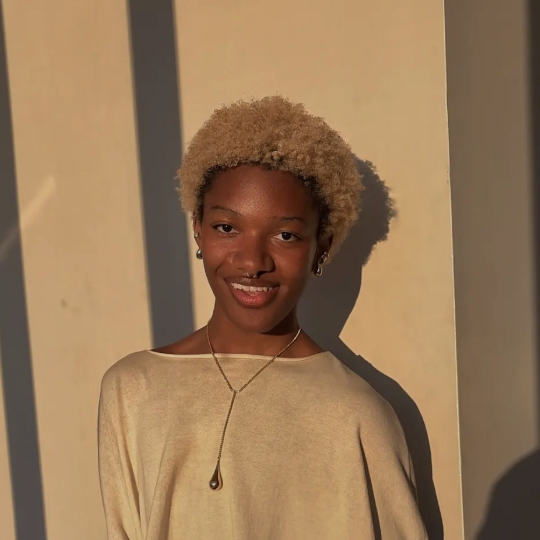
Elijah Mays is a New York University graduating senior who double majored in Africana Studies and Performance Studies. Their work focuses on how race, identity, and memory are produced, distributed, and modified through cultural forms at the intersection of performance, Black studies, and archival research. The politics of representation in visual cultures is of particular significance. A commitment to Black archival practice including both recovering and imagining methods of documenting that confront the ways in which Black histories have been routinely ignored or misrepresented within dominant cultural institutions. They are interested in how performance itself can serve as an archive, activating and preserving histories that have been left out of regular archival systems. They have a special interest in diasporic studies that recognize the Black diaspora as a network of continuous exchanges, returns, and interconnections between Black cultural communities, artistic practices, and aesthetic traditions throughout time and space, rather than just as a global migration from Africa.