Rendering Magnitude in 3.11 Cinema of Japan
Rendering Magnitude in 3.11 Cinema of Japan
A talk by Professor Markus Nornes (University of Michigan, Ann Arbor)
Thursday, March 5, 3:00pm - 4:30pm
721 Broadway, Room 652
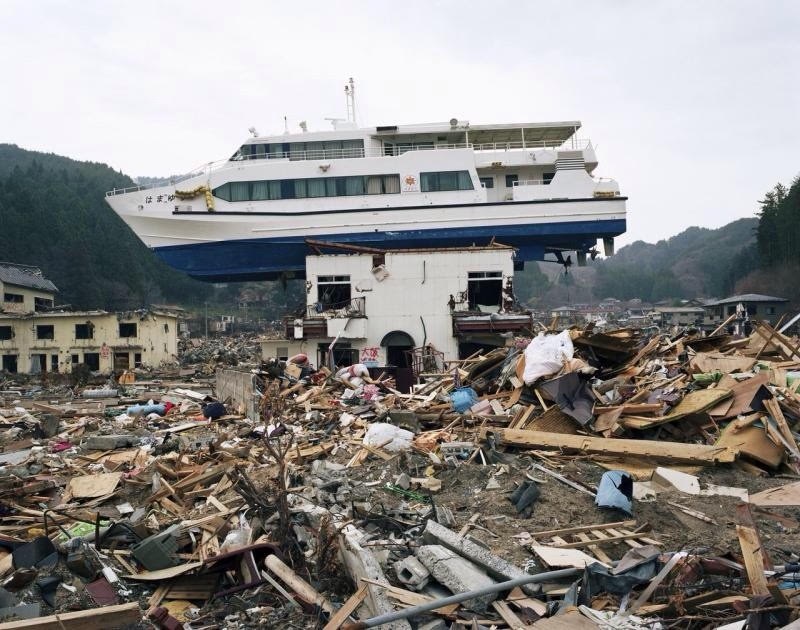
In the wake of the triple disaster in Northeast Japan, many in the film world suspected that the scale and profundity of this event would affect people’s sense of reality—and by extension the way filmmakers conceptualized and created documentaries. This lecture examines this problem, focusing on a single technique: the “moving camera.” Drawing on the film theory of Bill Nichols, it demonstrates how this rather mundane technique was deployed as a form of “vivification” to gesture to the “magnitude” of this historical event. A set of independent documentaries, many already canonical for 311 cinema, provide a variety of iterations of the technique; the differences in approach are both technological and subjective. Thus, they reveal some of the ideological dimensions of documentaries made amidst the devastation. Comparison to vivification strategies in 1945 Hiroshima and Nagasaki will also help locate this technique historically, and help us consider whether Japanese documentary did, indeed, transform after 311.
Open to the NYU community. Valid NYU ID Card required. First come, first-seated.
About the speaker:
Markus Nornes is Professor of Asian Cinema at the University of Michigan, where he specializes in Japanese film, documentary and translation theory. He has done extensive programming on the international film festival circuit, especially at the Yamagata International Documentary Film Festival. He has written books on Japanese documentary, City of Sadness, film translation, pink film and a critical biography of director Ogawa Shinsuke. His recent book, Brushed in Light, is on the intimate relationship of calligraphy and East Asian cinema. Nornes has also directed a number of documentaries, including The Big House (2018, co-directed with Soda Kazuhiro et al).