Semaj Murphy
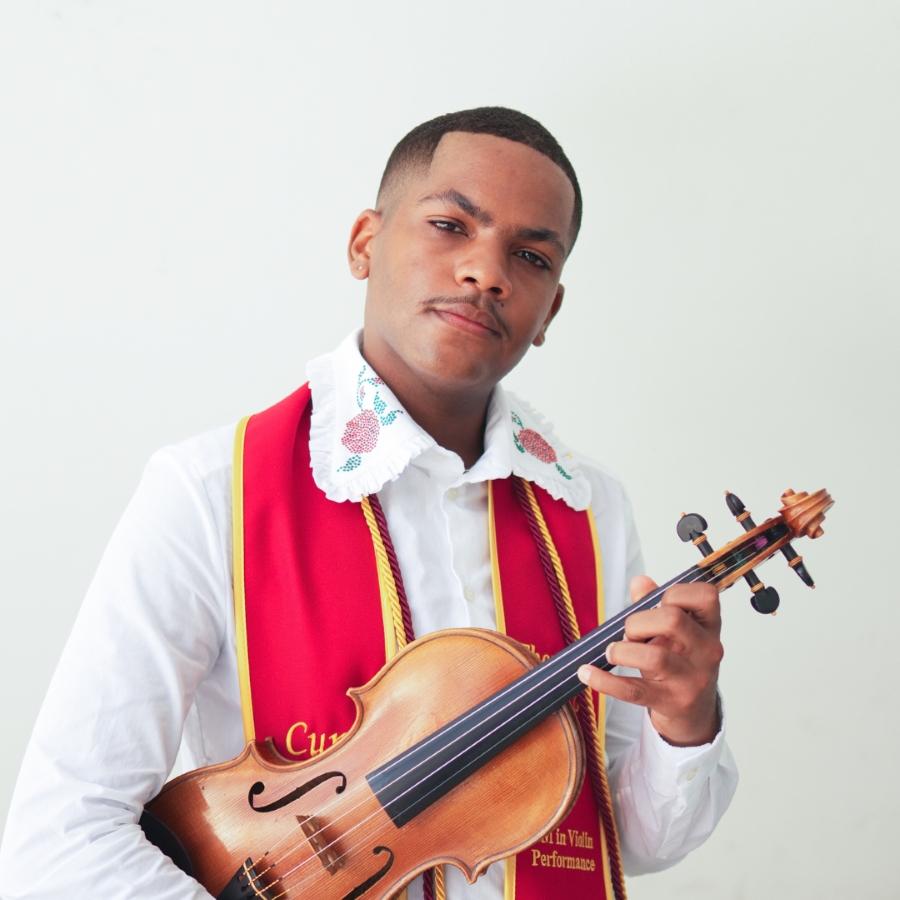
M.A. Arts Politics Class of 2027
B.M. Violin Performance, Minor in Music Industry — USC Thornton School of Music
A Philadelphia-born multidisciplinary musician, creative producer, and cultural curator, Semaj Murphy (He/They) works at the intersection of sound, identity, and cultural storytelling. They hold a B.M. in Violin Performance with a minor in Music Industry from USC Thornton School of Music and are pursuing an M.A. in Arts Politics at NYU Tisch School of the Arts.
Recognized for their versatility across classical, commercial, and interdisciplinary spaces, Semaj has collaborated with artists including Beyoncé, John Legend, The Piano Guys, Imagine Dragons, Metro Boomin, Jeezy, Malcolm Todd, and Mariah the Scientist. Their performance and media credits include Jimmy Kimmel Live!, the 2022 NFL Honors, Beyoncé’s 2024 NFL Christmas Halftime Show, and Netflix’s Beverly Hills Cop: Axel F.
Semaj has also served as a violin teaching artist with the Los Angeles Philharmonic’s YOLA program. Internationally, they served as a music director and arranger in London, producing and directing an acoustic unplugged performance featuring original string arrangements recorded at Abbey Road Studios. Their recent curatorial work includes Black Tears of Oil and Honey, an interdisciplinary performance exploring Black queer archival history through music, poetry, and film at the Los Angeles LGBT Center.
Rooted in cultural history, Semaj approaches sound as a cultural archive, exploring memory, identity, and community through performance, creative production, arts programming, and curation. At NYU, they extend this interdisciplinary practice across Tisch and the Steinhardt Strings program, integrating Arts Politics with continued classical training under Grammy Award-winning violinist Melissa White.
What drew you to the M.A. in Arts Politics?
What drew me to Arts Politics was a desire to understand how artistic disruption can translate into meaningful institutional change. My experiences in classical music led me to question who traditional artistic institutions are built to serve, how artistic legitimacy is constructed, and what becomes possible when we break down the physical and cultural walls of the concert hall. I became interested in creating more inclusive, participatory, and multisensory experiences that dissolve rigid boundaries between artist and audience, allowing sound, movement, visual imagery, and other forms of expression to coexist. I wanted to explore how cultural spaces can become more expansive, responsive, and reflective of the communities they serve.