Richard Move has been called once more to awaken the spirit of Martha Graham.
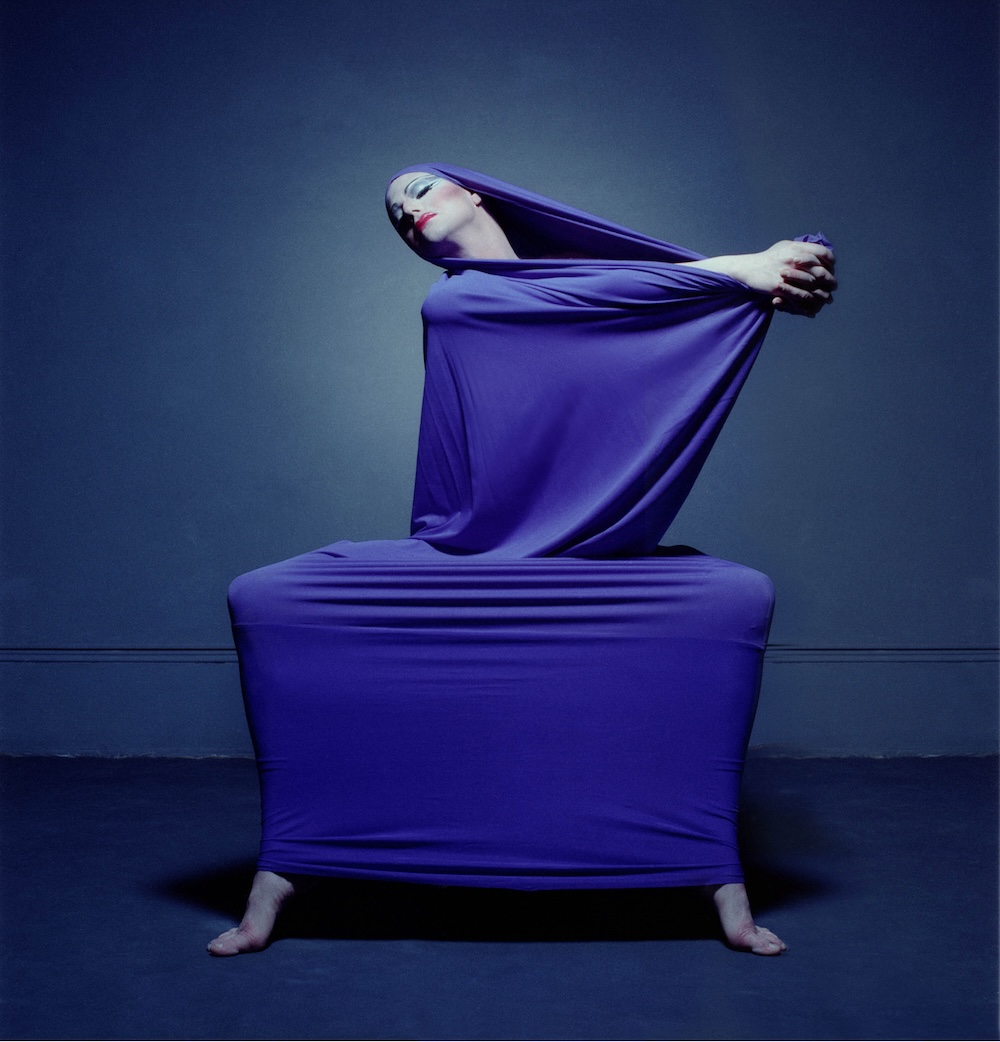
For nearly three decades, dancer and choreographer Richard Move has faithfully reanimated the works of Graham—the definitive godmother of modern dance—through sharp, high-spirited performances that enthusiastically break with convention. In 1996, responding to an impulse to perform as Graham at the “peak of her powers,” Move began staging the Martha@... series, a fiercely original variety show that revived memorable works from Graham’s physical prime. The performances were uncanny, humorous, and unmistakably charged with Move’s affection and wonder for the 20th century dance luminary.
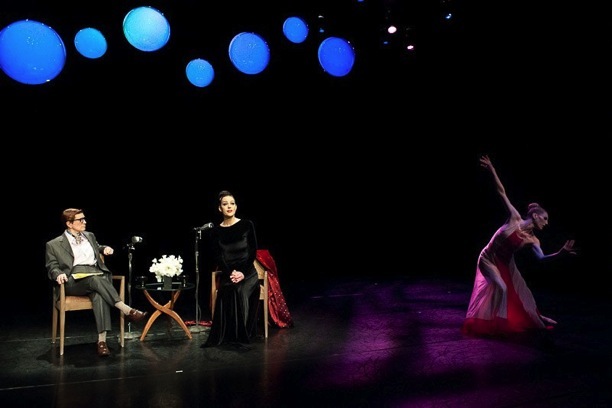
Now, Move is remounting a singular work from the series that was first introduced in 2011. Martha@BAM—The 1963 Interview recreates a conversation between Graham and dance critic Walter Terry (played by Tony winner Lisa Kron), catching the artist at a pivotal moment in her life while exploring some rare flickers of vulnerability in the previously unassailable creative force. Relying solely on an interview recording originally provided by the 92nd Street Y’s Harkness Dance Center, Move’s choreography captures the trademark verve and personality of Graham through a swirling blend of dance, memory, and verbatim dialogue.
Below we spoke with Move about reviving Martha@BAM—The 1963 Interview for the Next Wave Festival, how their relationship to Graham’s work has consistently evolved, and the role of shepherding the next generation of art-makers.
Martha@BAM—The 1963 Interview is playing at BAM through November 1. Learn more here. Richard Move is an assistant arts professor in the Tisch Department of Dance, a 2023 Guggenheim Fellow, TED Global Oxford Fellow, and New York Public Library Dance Research Fellow. They earned their PhD, MPhil, and MA in Performance Studies at NYU Tisch.
Your work interpreting and reanimating the life and works of Martha Graham now spans three decades. I’m curious how your relationship to this series and Graham the artist has changed over that time?
RM: Yeah, it is 29 years this fall, because the first show was November of ‘96. That's shocking. But then after shock, the first thought I have is, wow, how absolutely unusual for any kind of show—or concept for a show, or character-driven work—to have that kind of life. I guess Phantom of the Opera runs that long. You know what I mean? Blue Man Group, I guess, ran that long, probably.
Now, a few things that make it very different is I will be deeply immersed in [Martha Graham] and then leave it and come back. So that is very different. Then the other thing I would say that has kept everything going is this notion that I feel with each iteration there's kind of a new, specific assignment. For instance, this show, Martha@... The 1963 Interview, we made it in 2011 and we had two New York runs in 2011. Then it went to Singapore, and that was it. So there's a revival aspect, which I've never done before. I've never tried to remount a show, even a Martha show. It was always evolving, which grew out of its first structure, which was like a variety show, vaudeville-like format.
So what that means is it was different every time. I would write different monologues, and I would invite different guests. I had one where I interviewed Merce Cunningham, another I interviewed Yvonne Rainer, another one had a Mark Morris premiere—so completely evolving. And then the dances I would make with my group would be a different work each episode.
What I'm trying to express is how different just about every adventure with the character has been. So I'm hungry to get back, because [the last performance as Martha] ] was in 2019 in São Paolo.
Do you find The 1963 Interview departs from other performances in the Martha series and moves towards conveying an intimacy or softness about this period in her life?
RM: Yeah, that's a great point. One of the reasons [Lisa Kron and I] were both so drawn to it and to turn it into a whole production, to commit to it, is because it is a very interesting time in her life—just about 6 weeks short of her 70th birthday. And she was very much a stage animal, and she even is quoted a lot saying, “I want to be remembered as a dancer first, and a choreographer second.” That is very particular to her because she's one of the great revolutionary thinkers and one of the great modernists, right? She changed everything and developed a technique that's as complex as the great ballet. Yes, she was the star of those pieces, but you'd think she would be a little more comfortable with retiring as a dancer.
So this is a very interesting moment in 1963. As I said, she's almost 70. She, at this point, had the beginnings of rheumatoid arthritis, where her hands and feet started to get disfigured. Not exactly in ‘63, but really only a few years later. And so you would then, after that, never see her without gloves. So we have this valiant effort to not face mortality. She even called retirement her first death. A dancer has two deaths, and the first is basically when they retire. So it's a very interesting moment and probably a difficult moment.
Opposite of Graham is this relatively obscure dance critic, Walter Terry, who seems to have a very unique relationship with Graham. How does he shape the contours of this conversation and subsequently this performance?
RM: She was very good friends with Walter Terry. They had known each other for about 20, 25 years. He really was enamored with her, as any arts journalist would be. But we have documentation of them as friends, hanging out. So I think she felt particularly comfortable with him. She would have felt particularly comfortable, too, in this setting, because they had done it two or three times before.
We've all been very interested in who this Walter Terry character was—we really just have a few photos of him, usually in book jackets or things. There's a wonderful Warhol line drawing of him where he has on a pinky ring and ascot. He has a cigarette holder. He seemed to have great style. So really, the only way she and I and everyone get to know him is through his recorded voice.
One of the things that I think is very touching is [Graham] still kind of—you can hear she wants to be understood. She wants to take this opportunity to clarify some things. And I find that very touching, because she's a living legend at this time. And then I feel she had an elusive kind of quest for love that maybe never was fulfilled. Doing all that she did, I don't know that it would have been realistic to think about families and things, having kids, all that. A lot of this comes through.
My premise was always that she was a bit more at the peak of her power, and there's a little more fragility in this version.