The storytelling traditions of Native American and Indigenous communities are rich and revered, intuitively woven into the fabric of daily life. Often relied upon to confer learnings and build intergenerational connection, Indigenous storytellers are the keepers of history, culture, and experience. Despite this deep storytelling legacy, Indigenous creators and their work are only just beginning to penetrate the boom of prestige television and streaming culture. Shows like Dark Winds and Reservation Dogs and films like Fancy Dance and Frybread Face and Me have recently found mainstream platforms and broader audiences, but Indigenous stories remain disproportionately sidelined. Even as streaming giants Netflix and Amazon take their productions to Native lands in New Mexico, where a burgeoning film and TV industry awaits, few projects are actually helmed by Native writers and directors.
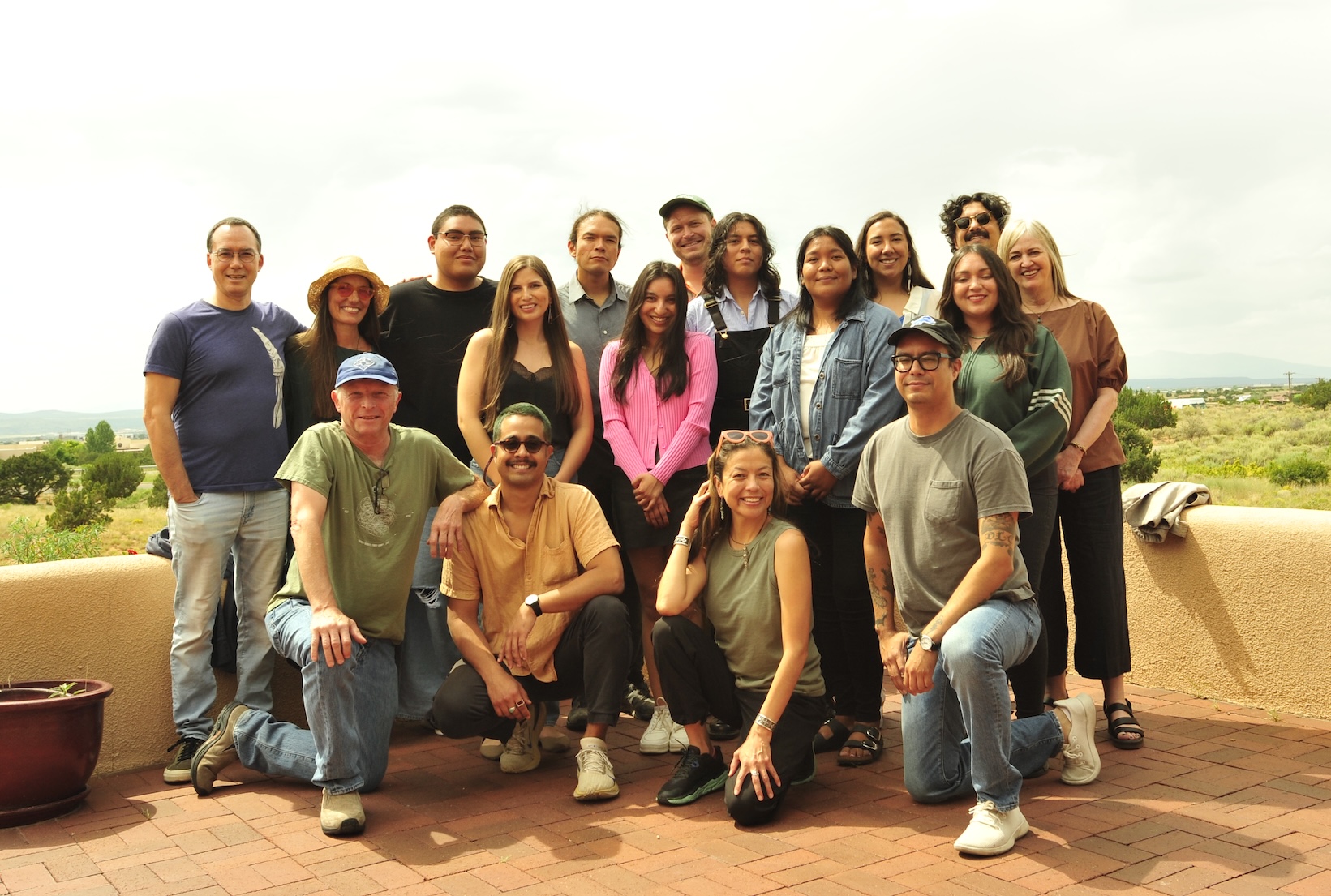
Recognizing these persisting obstacles, the Tisch Graduate Film Program recently aimed to expand on its priority of cultivating and supporting Indigenous directors and writers. For three weeks in July and early August, the Graduate Film Program held a tuition-free intensive filmmaking workshop on-site in Santa Fe, New Mexico, marking the program’s first-ever off-campus instruction for non-University students. The program drew 11 students of varying filmmaking experience from New Mexico, Oklahoma, Washington, and Canada.
Grad Film Professor Andrew Okpeaha MacLean, an Iñupiaq filmmaker born and raised in Alaska, led a team of instructors and assistants in a collaboration with Santa Fe Community College and the Institute of American Indian Art. MacLean made his feature film directorial debut at the 2011 Sundance Film Festival with On the Ice and most recently served as a writer on ABC’s Alaska Daily. He was joined by Grad Film faculty and workshop co-creators Barbara Schock and Jennifer Ruff, who collectively envisioned the program as a condensed, satellite version of their on-campus instruction at Tisch.
“The workshop was built around a series of exercises that we do here at [Tisch],” MacLean said. “So it was giving [the students] a little taste of the program, and then we asked them to do a slightly more substantial exercise to finish with. Given that they're not able to really marshal the resources of a full film shoot, it’s still meant to be something that's pretty substantial.”
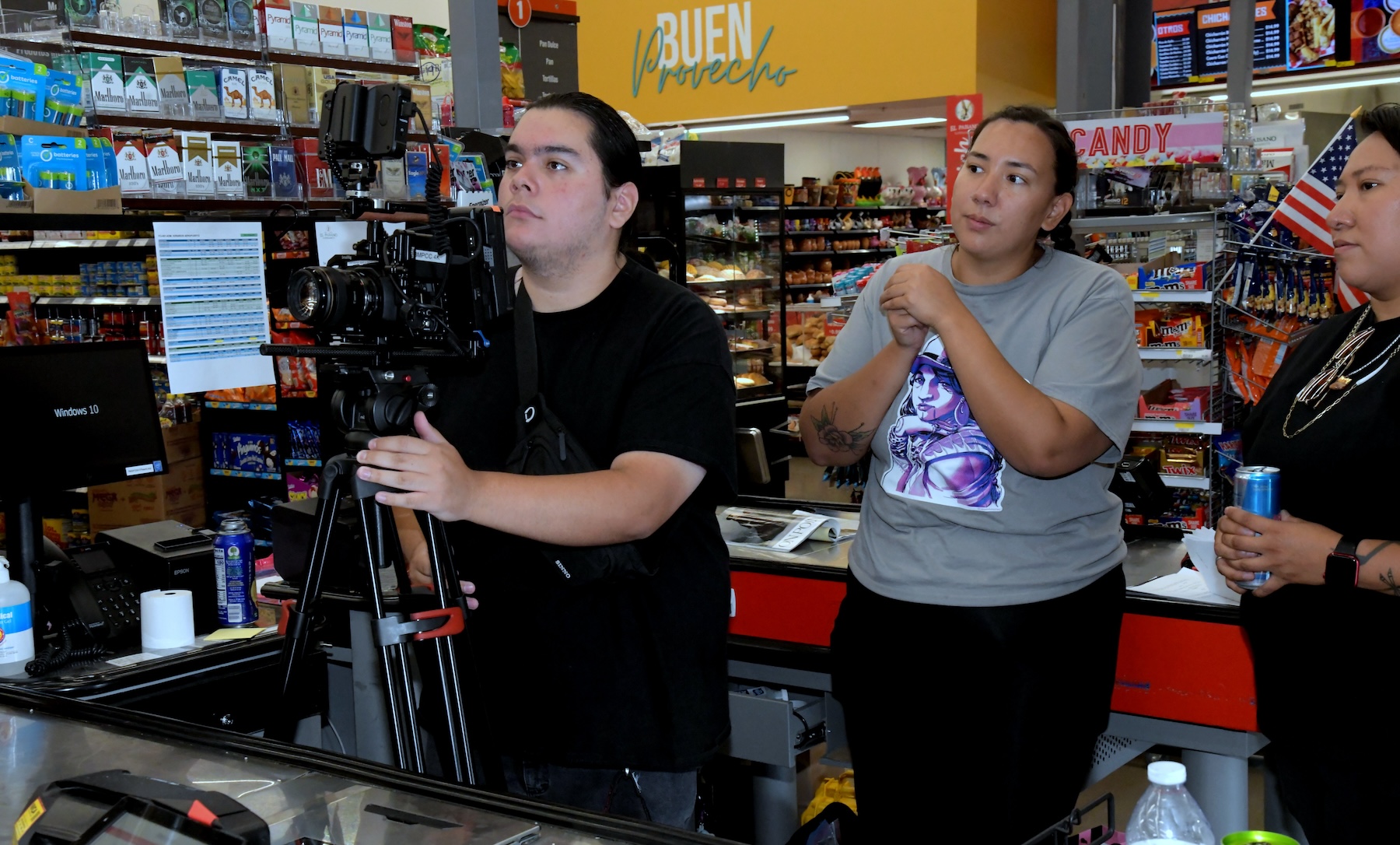
Tasked with spearheading the workshop’s curriculum, MacLean called upon the hands-on, intimate approach regularly applied in the Grad Film Program: teach, shoot, review. “I would give a lecture and talk about aspects of the craft, aspects of filmmaking, and then at the end of the lecture I would assign an exercise,” he said. “Usually the next day the students would be able to go off and shoot that exercise. They would come back the following day, edit in the morning, and then we'd meet in the afternoon and screen and critique the exercises.”