Curriculum

Mission Statement

This is a one-year intensive Master of Professional Studies (MPS) degree with a focus on embracing new technology, science, and creativity, to develop unique points of view, experiences, and concepts to advance the art of storytelling.

In this rigorous one year program (9 months from end of August to mid May), our weekly schedule holds trainings and courses Tuesday-Wednesday-Thursday leaving students with four day weekends to work on assignments, projects, and course work. 

In each academic year, the cohort are assigned by faculty into three production crews to develop a group thesis 8-10 minute filmed entirely on the virtual production stage.  While each student is assigned a leadership role, every student will rotate through each role during production and must crew in supporting roles for the other two groups throughout the entire production process.

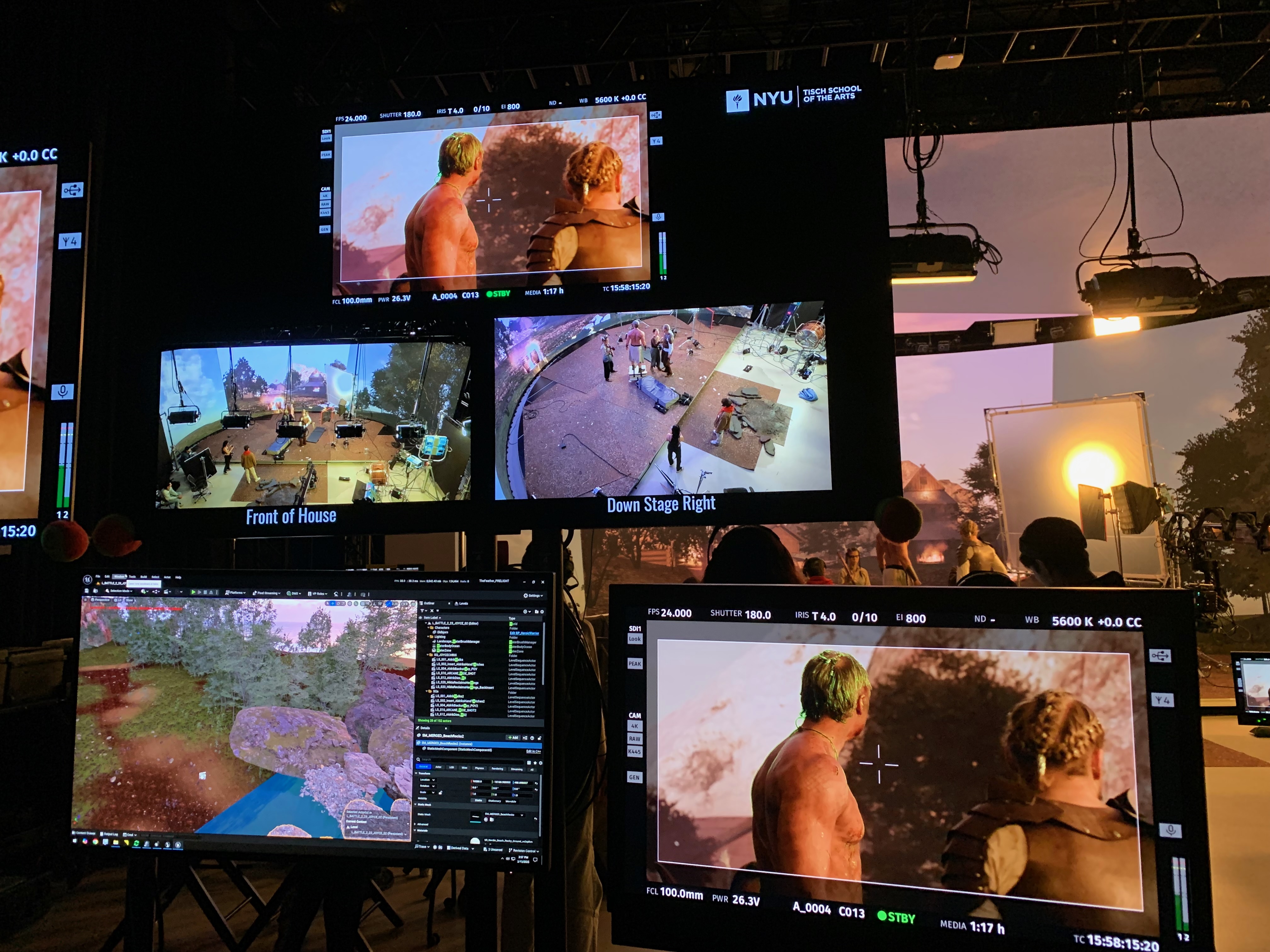
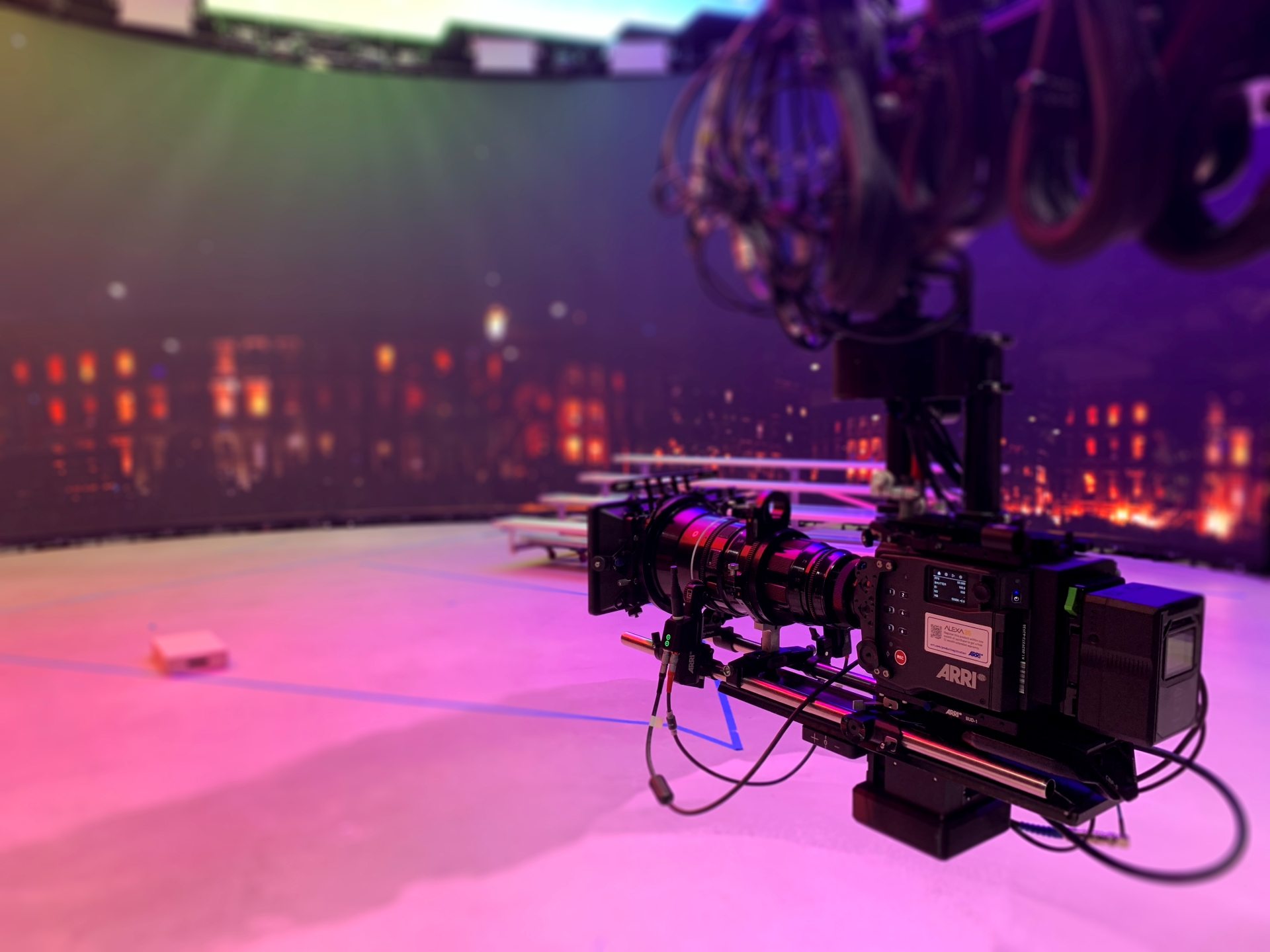
In the fall semester students will learn the technical workflow and software predominantly used for virtual production such as Epic Games Unreal Engine, Autodesk Maya, utilizing version control through Perforce. Course work carries from virtual art department and previsulaizaion in the lab to the virtual production volume where you will get hands-on-training from engine operations, lighting, location sound recording, performance capture, DIT, TechnoCrane to principal photography using an ARRI Alexa 35.

In the spring semester the three crews will each go into a two-week production period filming their group thesis.  Students will also spend time preparing their resume & reels, devoting time to internship or research project and learning how to ethically harness AI tools, all while finishing the thesis for presentation at the end-of-the-year screening.

If you would like to learn more hit us up! 

FALL SEMESTER:

INTRODUCTION TO VIRTUAL PRODUCTION

4 credits


Professor David Poyner

Introduction to Virtual Production is a class composed of lectures, discussions, screenings, collaborative exercises, group critiques, and presentations. The course is designed to expose students to the fundamental principles of storytelling and collaboration through Virtual Production including producing, writing, directing, cinematography, performance, editing, art direction, and technical direction. The course will explore emerging techniques utilizing creativity and technology. How do you tell a story in this new form of collaboration? How can students apply what is learned to their own creative work? History and theory of Virtual Production will be studied and used to inspire personal and creative work in order to better understand how storytelling through Virtual Production can successfully be expressed and most effectively reach its audience.


MASTERS SEMINAR IN VIRTUAL PRODUCTION I: WRITING & DEVELOPING VIRTUAL PRODUCTION THESIS

6 credits


Arts Professor Sang-Jin Bae
Professor Rosanne Limoncelli, PhD


The class is composed of lectures, discussions, screenings, readings, critical and creative writing, previsualization, practical planning, collaboration, group critiques and presentations. The course is designed to expose students to the fundamental principles of Virtual Production storytelling and, through structured exercises, to guide them into imagining and planning the collaborative Virtual Production thesis projects. History and theory of story, visual writing techniques, and analog and digital previsualization will be studied and practiced to inspire professional, personal and creative work in order to better understand how a Virtual Production story can successfully be expressed through imagination and technology.


ART DIRECTION & PRODUCTION DESIGN FOR VIRTUAL PRODUCTION

3 credits


Professor Snow Yunxue Fu


This class presents an overview of history and theory of design and artmaking with virtual media. Students will learn how to prepare the design of their Thesis Production through guest lectures, workshops, plans and revisions. This course is designed for students to researchand explore making Virtual Production that spans from the conceptual proposal phase to asset creation through various software, performing look development to final lighting and rendering.

TECHNICAL DIRECTION FOR VIRTUAL PRODUCTION

3 credits


Professor David Poyner

This class will research and explore creative technology used in the innovation of Virtual Production. The class will teach the roles and responsibilities of the Technical Director from creative problem-solving utilizing science and technology to relationship development between the Directors, Producers, and key crew members of a Virtual Production team. Collaboration, teamwork, and ethical leadership will be practiced throughout the semester. This class will focus on designing and executing a Virtual Production session with performance capture and camera tracking to adapt thesis projects.


PRODUCING THE VIRTUAL PRODUCTION I

2 credits


Professor Ariana Taveras

This class is a practical workshop designed to teach students how to break down the budgeting and scheduling of a production in order to understand the process and apply it to their own Thesis Production and future professional productions. The students will learn professional budgeting and scheduling software, break down a script for production and post production, to budget assets, crew and talent and to prepare to produce their Spring Thesis Production.

SPRING SEMESTER:

MASTERS SEMINAR IN VIRTUAL PRODUCTION II: THE THESIS

6 credits


Arts Professor Sang-Jin Bae
Professor Rosanne Limoncelli, PhD


This is a workshop for students to put into practice the plan for the collaborative Virtual Production thesis projects. (Thesis projects should be a 8-10 minute digital production incorporating learned Virtual Production skills, a visual concept as a complete story with a beginning, middle, and end. Can be narrative, experimental or non-fiction. There will be a final presentation to faculty and student peers, with critical feedback discussion.) Utilizing the materials and plans prepared in the Fall semester, students will make final preparations for the thesis productions, engage in the on-set Virtual Production image capture, working collaboratively in multiple crew positions on cohort thesis productions. This seminar will also serve to monitor the post production process and give feedback for revisions culminating in the final presentations, as well as discuss the future of virtual production, and investigate the research and development possibilities of the dynamic, evolving, and emergent nature of this field.

PRODUCING THE VIRTUAL PRODUCTION II : Internship & Research

3 credits


Professor Ariana Taveras

Internships are done for credit, with the number of points depending upon the number of hours worked each week. Students register for the internship course after consulting with an academic advisor and considering the amount of time that they can work, the number of credits they need to earn, and the kind of work experience that would be the most meaningful within their programs. In the event that a student is unable to secure an internship or apprenticeship, they may instead pursue a research project under faculty supervision.

FINISHING / POST PRODUCTION / SOUND DESIGN FOR VIRTUAL PRODUCTION

3 credits


Professor David Poyner


This is a practical workshop in which students will work on the sound design and post production visual effects to finish and polish their collaborative Virtual Production thesis projects. Students will learn the core principles of color theory as it applies to film, tv, gaming and experiential performance. Course is designed as a workshop to perform post production of their captured footage including lighting, rendering, visual effects, compositing, integration, mix, and final layoff for presentation through broadcast, cinema, and stream. Students will collaborate with musicians and sound designers for their mix.


RESUME AND REEL BUILDING IN VIRTUAL PRODUCTION

3 credits


Professor Alex Coppedge

This is a practical workshop in which students will craft creative resumes, build a professional website, and edit a Virtual Production reel to display their academic and professional work. Students will learn the art, commerce and technology to present their work professionally and compellingly. The course is also designed to support students in presentation and the hiring process.


SPECIAL TOPICS: GENERATIVE AI FOR VIRTUAL PRODUCTION

3 credits


Professor Leilanni Todd

This course explores the integration of generative AI tools and virtual production. Students will experiment with AI-driven methods for conceptual development, previsulation, and production work. Through hands-on practice and critical discussion, the course prepares students to engage with emerging technologies shaping the future of cinematic storytelling.