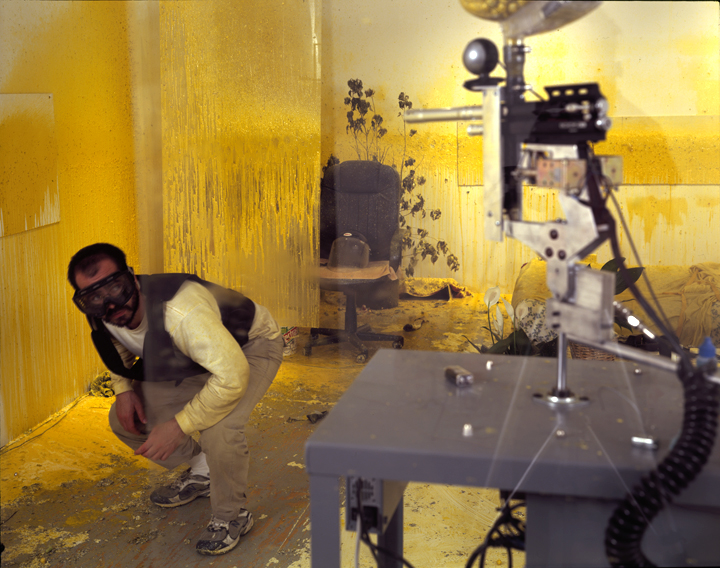
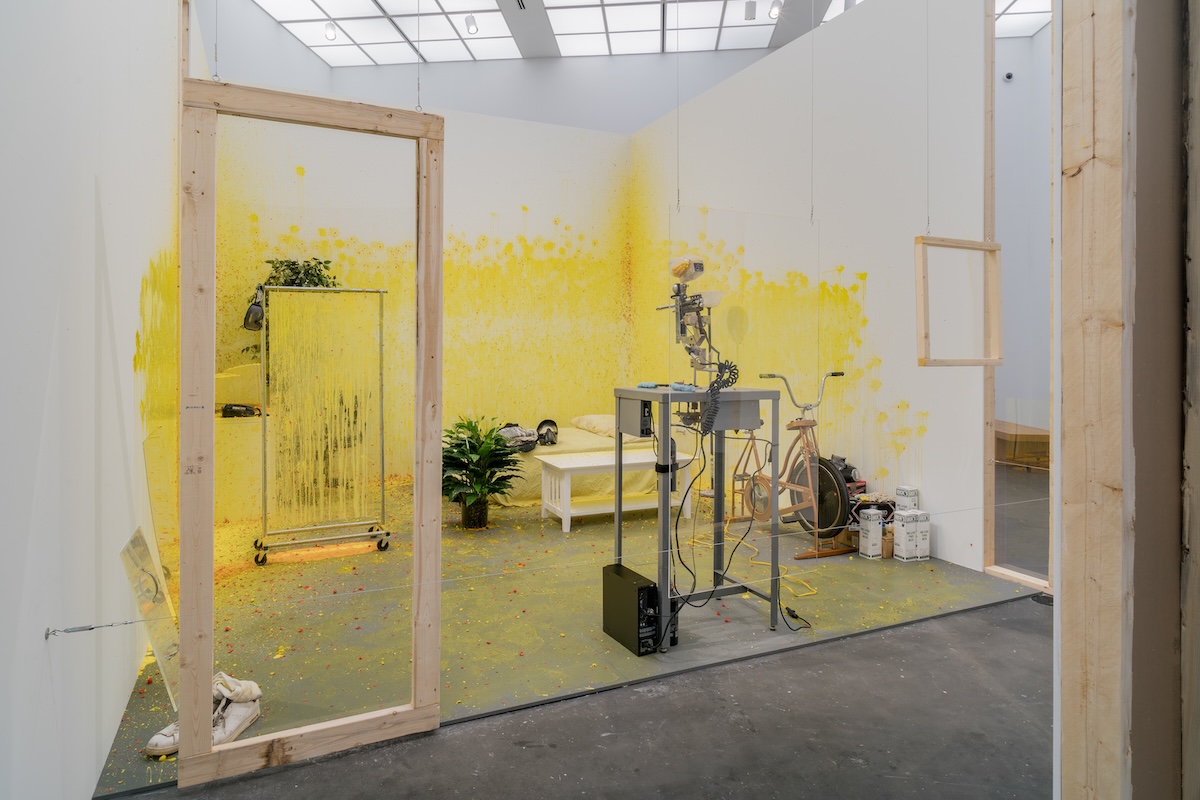
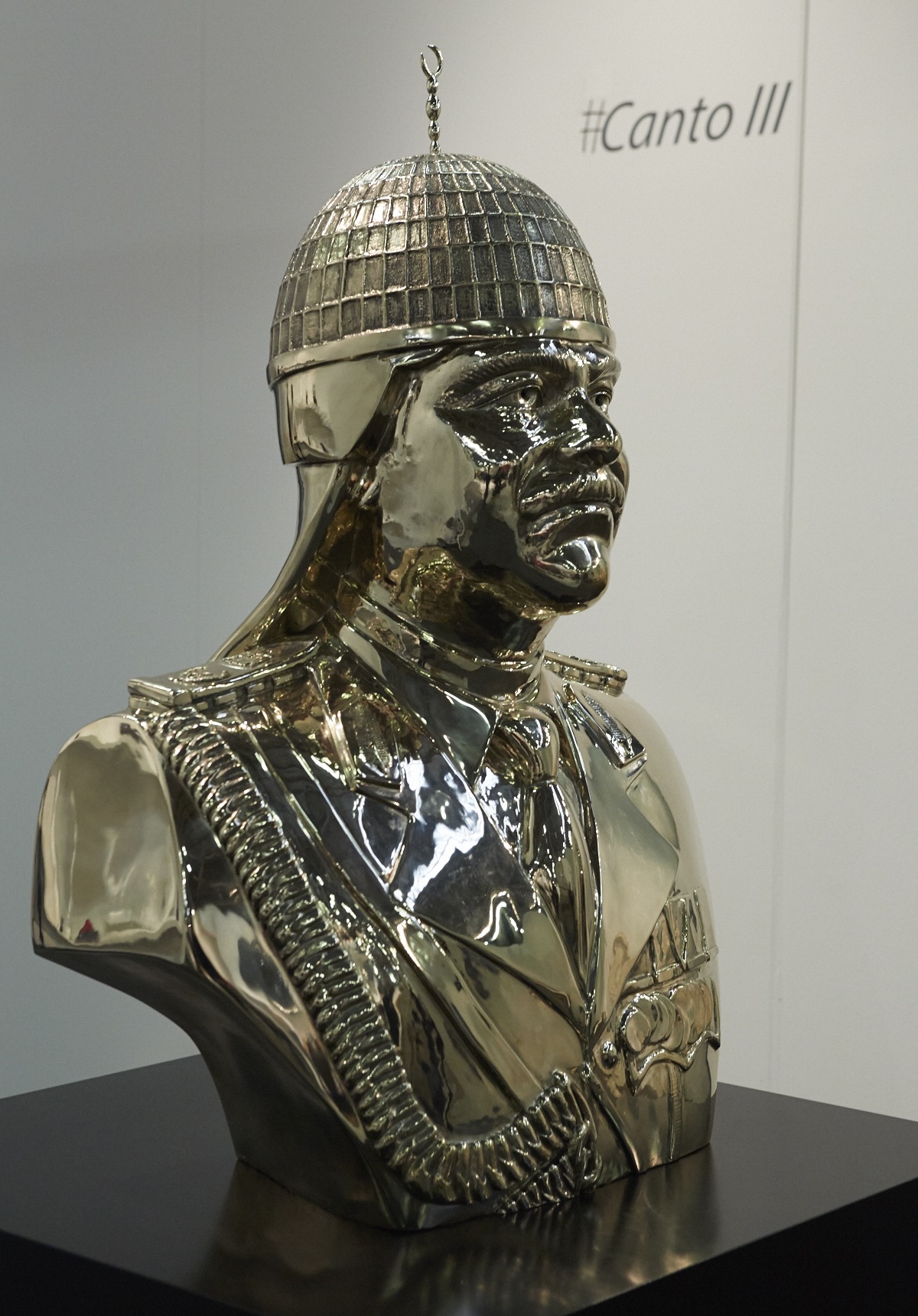
To date, Bilal has now lived longer in the United States than in his native Iraq. Born in 1966, he eventually escaped Saddam Hussein’s reign in 1991 and took refuge in Saudi Arabia, where he taught art to children. The following year he traveled to the United States and began studying to earn his BFA from the University of New Mexico—and later his MFA at the Art Institute of Chicago. Now, with a seemingly endless cycle of global political turmoil as material, Bilal’s often provocative works have come to serve as something of a cautionary voice on authoritarian regimes—a thread that appears repeatedly in his satirizations of Hussein.
“Dictatorship doesn’t happen, dictatorship is manufactured,” he said, recalling observations of Iraq’s transitional years entering Hussein’s rule. “It is based on fear of within and fear of the other. As an Iraqi who lived in Iraq for 27 years, [I saw] the birth of dictatorship when Saddam took over by simply subverting the power and becoming the sole power, silencing every voice.”
There are decades of indicators suggesting Bilal’s appetite for the politically absurd may indeed be insatiable. But these days his energy is pulled in new and varying directions, oftentimes leading back to his work at New York University and Tisch. Beyond the success of last year’s Indulge Me, Bilal continues to innovate in his work as a professor and researcher at NYU, confidently embracing the potential for AI across his practice. Last December, he was honored at the 2025 NYU Innovators Dinner as a First-Time Discloser, positioning him alongside NYU’s cohort of faculty innovators and celebrating his groundbreaking creative research. The project of interest is currently undergoing a patent submission for a new medical device that leverages AI technology. Bilal strikes an optimistic—if still realistic—tone when discussing his adoption of the dominant tech of our time.
“I was working with my partner who is a professor at NYU Abu Dhabi, and we came across how the very technology that I was engaging with in creating interactive artwork is going to be a technology in the future of medicine,” Bilal said. “We’ll call it a technological device that detects early cancer in women with the help of AI. We’re working with an integrated bioelectronic lab at NYU Abu Dhabi, and the technology doesn't exist yet, so we are giving birth to something massive in terms of detection.”
For Bilal, this interdisciplinary approach is not only a driving force in his own work, but also a blueprint for how he hopes the next generation of artists can welcome new technologies. Still, he recognizes the generational gaps that sometimes stymie that natural evolution.
“Every generation has their signature, and every generation before that kind of frowns on the new one,” he said. “I teach technology, performance, and digital photography, so we saw that when people frowned upon my generation for embracing technology.”
Publicly, these rapid advancements have at times led to unexamined attitudes: on one hand outright skepticism, on the other eager endorsement. Bilal remains neither shortsighted nor naive. He has been victimized by technology falling in the wrong hands, and empowered by its assistance in conveying stories of injustice. It will ultimately be the artists of our future who determine how these tools are wielded. From where he sits, he sees only promise.
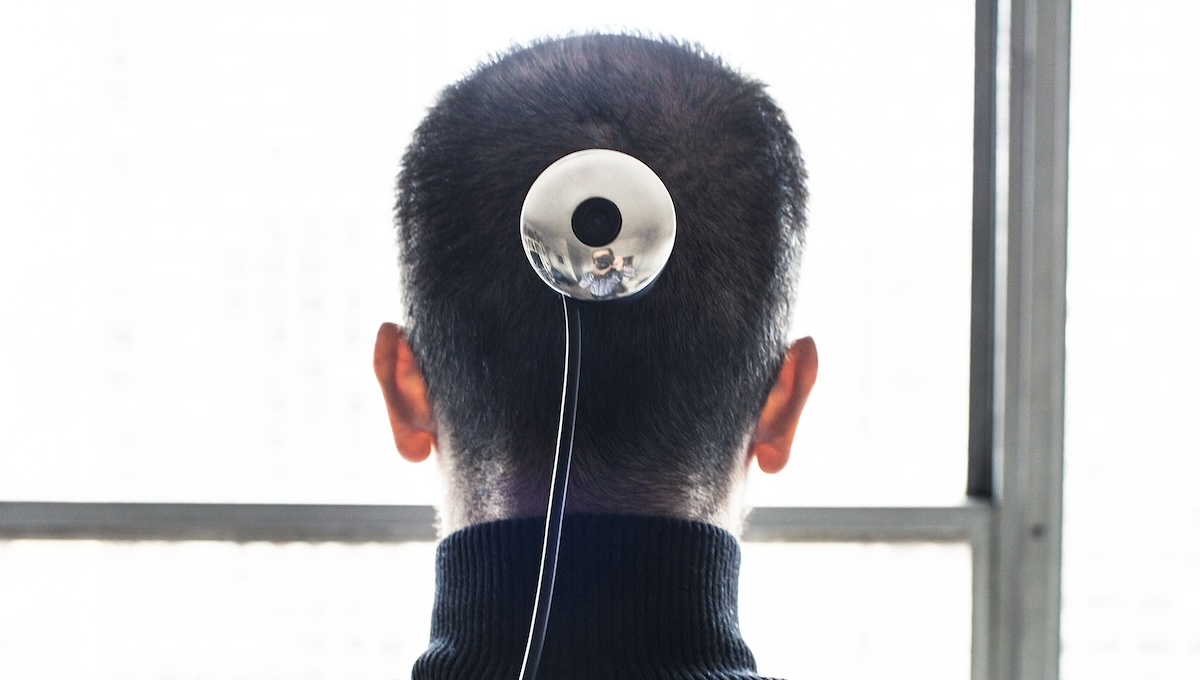
“There will always be people who misuse technology. Weapons are a misuse of technology; but on the other hand a pacemaker is technology, too. I think the new generation of artists is going to embrace what we have and it is going to be a leap. And our next leap is the connection of technology with the body. “