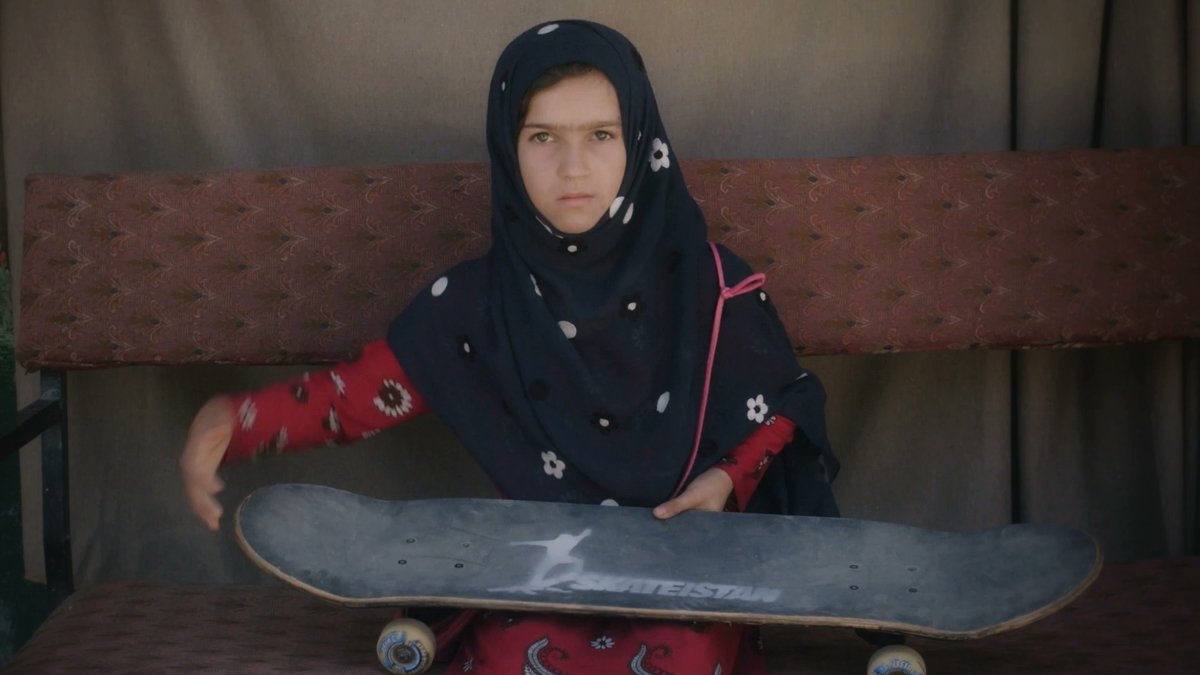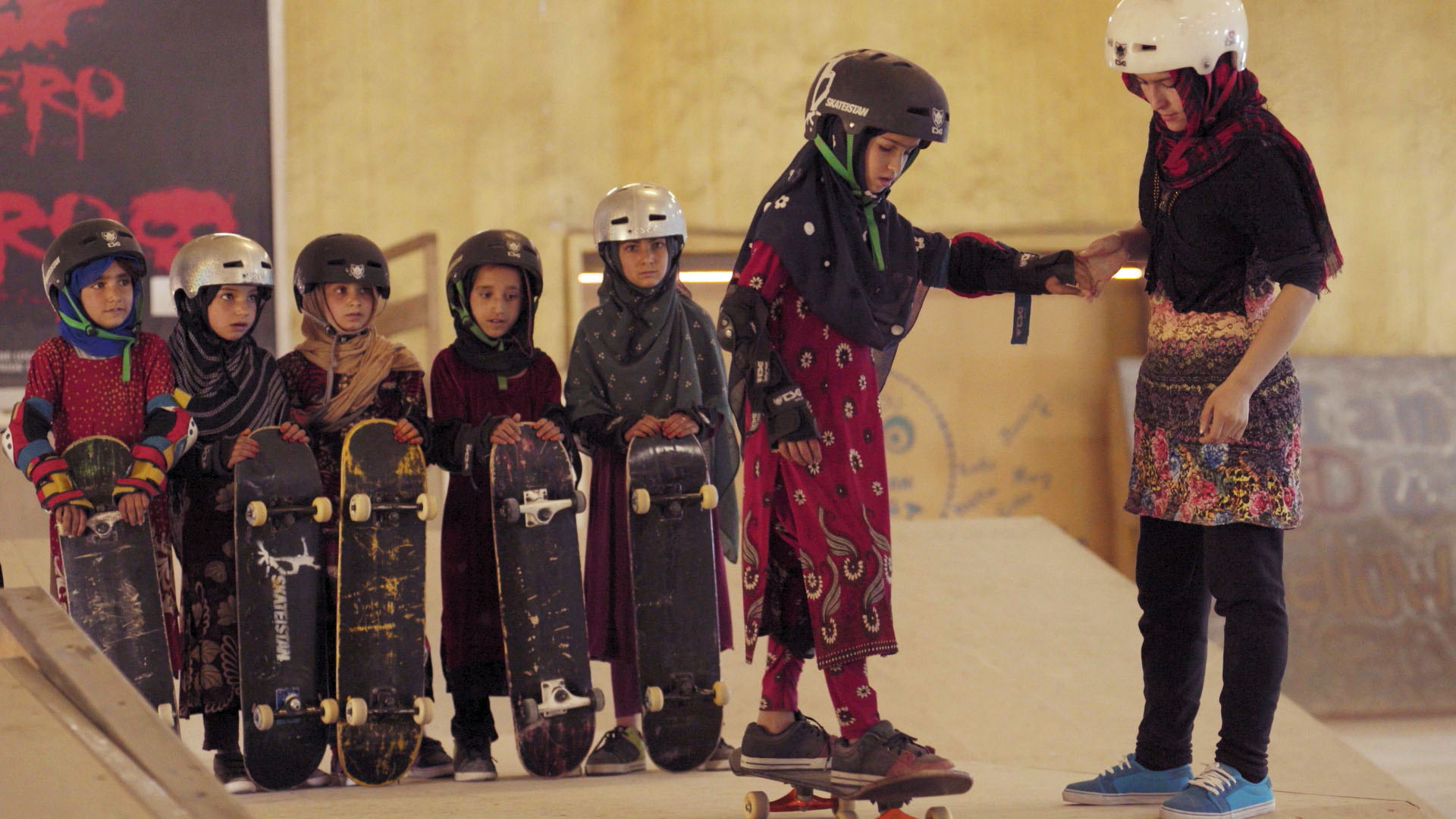
One thing is readily apparent at the outset of Learning to Skateboard in a Warzone (If You’re a Girl): Afghanistan is among the worst places to be born a girl.
As the short film opens in the streets of Kabul, filmmaker Carol Dysinger’s lens catches the glares of several Afghan men, their eyes each uniquely oppressive. It is a haunting montage of the male gaze and an agonizing first-person depiction of life for women in Afghanistan. Nearly two decades after the fall of the Taliban, women and girls are still largely forced into early marriages and banned from learning to read and write. But a new generation of Afghan girls is working to escape the gaze and rewrite their futures through schooling and skateboarding.
Dysinger is an NYU Tisch alum and associate professor at the Kanar Institute of Film and Television. Her short film, which won the 2020 Oscar for Best Documentary Short Subject, follows the girls of Skateistan, a nonprofit skate school in Kabul that has morphed into a full-blown educational initiative. Through the daring and selfless work of a group of women teachers, Skateistan recruits young girls from impoverished neighborhoods and provides them a curriculum to aid their transition into public school. Dysinger, along with a film team comprising mostly Afghan women, build a window into the lives of young girls whose indomitable spirits are paving a path to change in their homeland.
Learning to Skateboard in a Warzone (If You’re a Girl) is currently available on A&E and streaming on Hulu. The following conversation has been edited and condensed for clarity.
What I really appreciate about this film is its contrast, particularly between the harrowing and the playful. We transition between these worlds throughout the film. How did you determine the right balance in terms of tone?
CD: I’ve been filming in Afghanistan since 2005, so I’m very familiar with its nature. It’s a nation of poets—some of the greatest poets of the world have come from there. There’s this tremendous yearning, whether it’s for God or the beloved. It’s always given it this sense of tragedy, but still love.
We in America have the tendency to measure the progress in Afghanistan by our own measurements, and not by theirs. You have to start from where you are, and they have come a long way from where they were, in my humble opinion. These girls in [Skateistan], they’re poor girls. These are not rich girls. These are poor girls who Skateistan has found, and so for them getting an education is a miracle and skateboarding is just the cream on top.
What I love about Afghanistan is the girls who get so little but do so much with whatever they get. I always wanted to make a movie about them. I made a film called Camp Victory, Afghanistan, which was about the training of the army, so I’ve always made movies in the masculine realm of war. But I spent a lot of time with women there, so when [the producers] came to me with this idea I thought, “This is the perfect way for me to try to get you to know what it’s like to be a woman in the women’s room…”