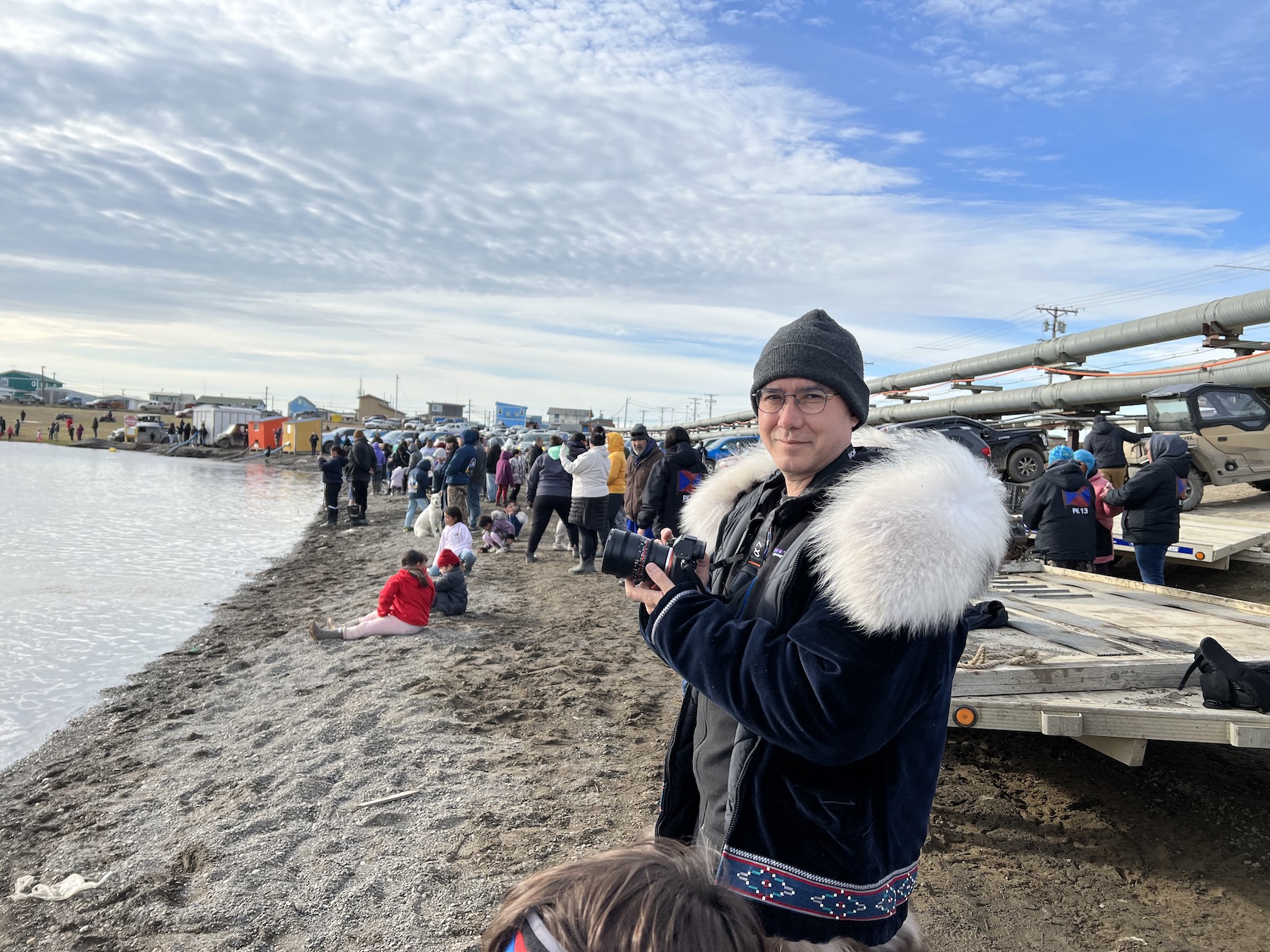
“If I had a dollar for every time I've been asked if I live in an igloo, I'd be able to fund another movie,” says Grad Film Professor Andrew Okpeaha MaClean, seemingly only half-joking. As a member of the Iñupiat people, an Indigenous group spanning Northern Alaska and Canada, MacLean’s work in film and television is steeped in the rich storytelling traditions of his community. But for much of his life, the culture that harvested his own passion for stories hadn’t been accurately reflected back to him in art and media. “Everybody had heard of us, but we were never truthfully depicted on screen.”
The storytelling traditions of Native American and Indigenous people have long served as tools for connection and learning, weaving together generational memories and lessons to promote community wholeness and understanding. MacLean’s own mother is a linguist whose translations play an integral role in transferring stories between generations. For years, MacLean forged his own creative pathways in his homeland and beyond, developing a love for the theatre before eventually arriving at NYU Tisch’s Grad Film program, first as a student and eventually in his current post as professor.
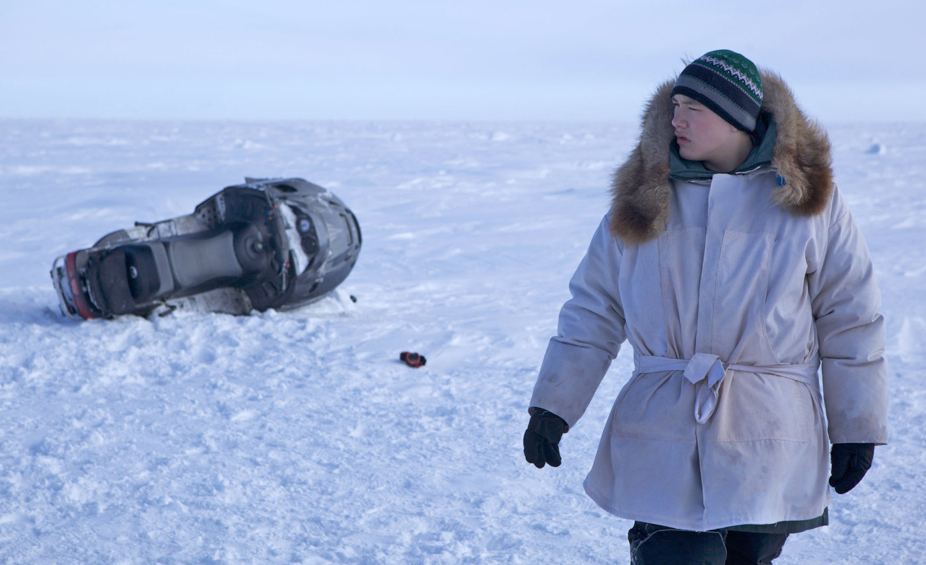
MacLean made his feature film directorial debut at the 2011 Sundance Film Festival with On the Ice, a film following the fallout after two teenage boys experience a tragic loss on a seal hunting trip. Set in his hometown of Utqiagvik, MacLean’s debut found success on the festival circuit and took home Best First Feature at the Berlin International Film Festival. Most recently, he has served as a writer on Alaska Daily, bringing much-needed authenticity to the Hillary Swank-led television series about a journalist restarting her career at an Anchorage newspaper.
In honor of Native American Heritage Month, we spoke with MacLean about how the storytelling traditions of the Iñupiat people continue to breathe life into his work today, and the importance of ushering in a new generation of energized Native storytellers at Tisch and beyond.
Growing up in Alaska, what were some of your earliest impulses to create or tell stories?
When I was a kid I was just really into imaginary play—I was always pretending. I was that kid who was looping my brother in or looping other kids in to construct these elaborate games, and I can see my kids doing that same sort of thing. Coming from the Iñupiaq culture, it's a story-based culture, and I was exposed to traditional stories from an early age. My mom is a linguist, and part of the work she used to do is translating stories—talking to elders and talking to people who were these repositories of knowledge. So I think that's kind of a part of it.
I [initially] got into theater—at a certain age I just started acting, and then I started directing in college. The Western concept of the theater isn't really grounded in or about traditions, but I sort of started using it for that. One of the first plays that I wrote was a collection of traditional stories. I was living in Seattle at that time and I brought it home to my village, Barrow, which has gone back to its traditional name, Utqiagvik. I eventually moved back home, largely because I wanted to try and see if I could teach myself the language. There was a cousin of mine who was also interested in learning the language. She said, “Hey, why don't we start a theatre company,” and so we started doing plays in the language primarily based on traditional stories and working with elders. It was after doing that for a little bit that I applied to film school and came out [to New York] and started getting into film.
The journey towards Native American and Alaska Native representation in the arts and media has been fraught with stereotyping and irresponsible portrayals. When did you first see yourself and your community accurately reflected in film and TV?
When I was growing up, I never really saw myself or my culture depicted truthfully. It was constantly present, because we're kind of one of the iconic tropes of the world, right? Everywhere that I've been, everyone has always heard of the Inuit people. But if I had a dollar for every time I've been asked if I live in an igloo, I'd be able to fund another movie. It’s kind of ironic, because igloo is literally just the word for house. So the truth is that we all live in igloos.
But things like ice cream sandwiches, nose kissing, and that sort of stuff. Everybody had heard of us, but we were never truthfully depicted on screen. [Typically] when you saw Native people on screen, they were depicted by Asian actors. In a film like Map of the Human Heart, which was made in the nineties, Jason Scott Lee, who is of course Asian, played an Inuit man. Sometimes we were played by other Native Americans, but we don't look anything like Lakota people.
It started changing right when I applied to film school. It was right at the time that Zach Kunuk made the film Atanarjuat: The Fast Runner, which went to Cannes and won the Caméra d'Or. Zach grew up and still lives in Igloolik, Canada, and he’s completely traditional, completely fluent in the language. Along with Igloolik Isuma Productions, they started making things that were just completely truthful and so when I saw that, it kind of blew my mind. He's still a filmmaker that I really look up to and admire.