Opening Reception of The Object/Photograph: From the Archives of the Department of Photography & Imaging
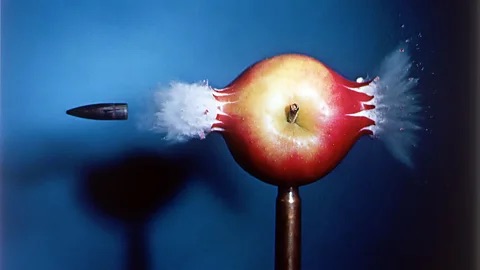
Please join us for the opening reception of our Fall 2026 exhibition on Wednesday, September 9, 2026, from 6:00 PM to 7:30 PM. RSVP is required.
FOR IMMEDIATE RELEASE
The Object/Photograph:
From the Archives of the Department of Photography and Imaging
The dream of photography was born of the observations of a Muslim scholar imprisoned early in the 11th century during the Arab Enlightenment. His darkened cell was the first documented Camera Obscura, created by the effects of light projecting images of the outside world onto the walls of his prison cell. From this observation, Ibn Al-Haytham would unravel the entangled knot that was the mystery of light and vision.
Upon his release, he would write his 7-volume treatise on optics. It was the birth of empirical science.
Eventually, his ideas would become the central thesis of 18th-century natural philosophers: Religious dogma could not explain the wonders of the world, but rigorous, objective observation revealed the hand of God in the essential truths of the universe. Light was the key: The photon is a massless messenger particle that only has one function: To tell us something about something else. The lens, in all of its iterations, whether the Newtonian telescope, a Leica, or an electron microscope, would become the primary tool for investigating and decoding the truths that light tells us about the nature of reality.
Photography, and its ability to record observations and events, would fundamentally change our conceptions and connection to the universe: Photography would provide the experimental evidence of the General Theory of Relativity. It would reveal the double helix as the basic building block of life. A photograph of a particular young black man being beaten on the Pettus Bridge in 1965 would eventually lead to the Voting Rights Act.
Photographs, and the truths they reveal, have shaped our world.
Let us quickly dispatch any elephants that might be lurking. Images created through Artificial Intelligence are not “drawn with light”; they are not photographs. They are photo-realistic illustrations conjured from imagination. Painters have been doing this for centuries. Asking ChatGPT to create a convincing image of “Liberty Leading the People” in 2026 is structurally little different from a patron commissioning the same of Delacroix in 1830. Artificial Intelligence has changed and will continue to change the way photography is utilized in the world, but in many ways, it also reinforces the evidentiary nature and veracity of the pure photographic image. This might explain why so many of our current students are so enthralled with analog photography.
Photography, at its core, is still very similar to what it was in the 19th century. Light is collected from a scene and interacts with a sensitized surface; the image we apprehend is the alchemy of physics, chemistry, and/or electronics.
The part that has changed drastically is the way we consume photography. Paper, whether in the form of photographic prints, magazines, or newspapers, is very close to death. The photograph as an object/artifact is fast becoming an anachronism. The screen presentations that make up our world, public advertisements, iPhones, computers, etc., represent an image space that is by nature ephemeral. Electronic presentation has become the lowest common denominator. The size and quality of any image is simply the size and quality of whatever device you are viewing it on. Watching “Lawrence of Arabia” on an iPhone is a viable option for many of the current generation and sacrilege for the fortunate few who remember being mesmerized by seeing an original Technicolor print projected on a 60-foot-wide movie screen.
When our department was founded some 40+ years ago, our founding Department Chair, Prof. Thomas Drysdale, recognized the need for a study library of original prints by master photographers. In the ensuing years, as we struggled to keep up with the breakneck pace of new technology, our archive of original prints was used less and less. In fact, I had pretty much forgotten it existed until I pulled out a dye-transfer print by Joel Meyerowitz so I could explain the process to an enthusiastic student.
I’d found a thread I couldn’t stop pulling. I reconnected with some of my favorite photographers, and I kept discovering forgotten treasures hidden in drawers.
This exhibition owes much to the legacy of Lee D. Witkin. Lee was one of our very first adjunct professors. He was a pioneer gallerist and dealer who cherished the handmade artifacts crafted by photographic masters. As you go through the exhibit, you’ll note that many of the most important works are the result of his generous donations.
Mark Jenkinson
Associate Arts Professor, NYU Tisch Department of Photography and Imaging