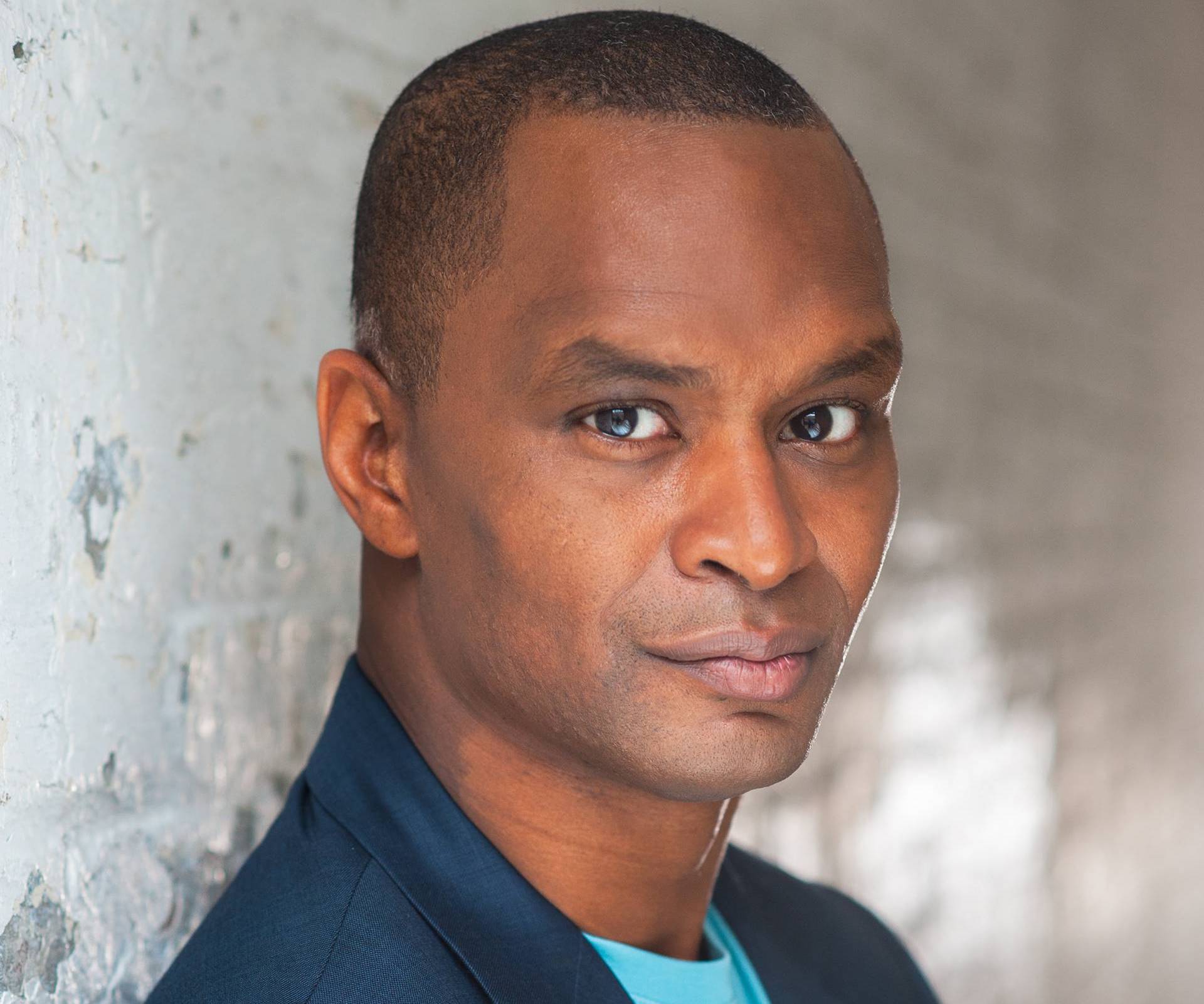
As both theatre-maker and educator, Carl Cofield finds harmony in opposites: the past and the present, the old and the new, the mentor and the student. When Twelfth Night comes to NYU Skirball February 11, a play he directed for Classical Theatre of Harlem (CTH) where he also serves as Associate Artistic Director, those disparate forces will meet head on.
Cofield, who serves as chair of the Grad Acting department at NYU Tisch, is an artist whose creative contours reveal a life dedicated to theatre. His early exploits as a child actor paved the way for a blossoming acting career across television, film, and the stage, including work seen at The Manhattan Theater Club, Berkeley Rep, Arena Stage, and The Shakespeare Theatre, among many others. But it was the community impact he found on the regional theatre circuit that led Cofield to this fully realized version of himself as director. For CTH alone, he has directed The Bacchae (New York Times Critics Pick), Antigone, Macbeth, The Tempest, Dutchman, and Twelfth Night, which debuted last summer and earned Cofield an Audelco Award.
Cofield’s Twelfth Night is billed as an afrofuturistic update to Shakespeare’s romantic comedy anchored by a majority Black artistic team and a dazzling turn from 2022 Tony nominee Kara Young. Prior to its two-week run at NYU Skirball (Feb. 11-19), and to kick off Black History Month in February, we checked in with Professor Cofield for a conversation that explores how the makings of his artistic life inform a fuller creative vision, and how representation and reimagination are bolstering theatre across the country.
What is your earliest recollection of being compelled to create—what did that look like for you?
Carl Cofield: I’m a second generation theatre person. My uncle was in the theatre at the Burt Reynolds Dinner Theatre in Jupiter, Florida. This is when Burt Reynolds had a theatre and would invite his film and television buddies down who wanted to do stage work. So, for me at an early age, probably about four, I really saw the power that theatre had. Unlike cinema, unlike TV, it was a communal experience and something that had a ritual to it. At that time I could only liken it to a religious ceremony. It made a lasting impression on my psyche—the magnificent power of theatre. I made a commitment right then: I knew I was going to spend my life in that medium.
Your initial artistic undertakings were as an actor, which began early in your childhood. On your journey to directing, what led you toward this fully realized version of yourself as a theatre artist?
There were two pivotal moments. I was very fortunate to create my lifestyle through acting. I started as a child actor, but it was theatre that was important to me. One of the big moments was my experience working at regional theaters. I had the privilege of working at Arena Stage in Washington, D.C., at Berkeley Rep in California, where I really got to see the art in conversation with communities. It wasn’t just a transactional venture. These theaters were creating work that amplified the voices and the conversations that they wanted to have with their community. That left a lasting impression on me.
And then, a more esoteric version of that is the journey and what it means to pass along this craft from actor to actor or director to director. Now I have the good fortune of being at NYU and helping the next generation of creatives come along. That’s something that I don’t take lightly.